
Contrary to the belief that hunting is a fading rural tradition, it is experiencing a renaissance among urbanites as a radical act of food sovereignty.
- This shift is not about sport but about rejecting the abstract, industrialized food system for a tangible, accountable relationship with sustenance.
- New participants, particularly women, are reshaping hunting culture around mentorship, conservation ethics, and mindful online representation.
Recommendation: View this trend not as a return to the past, but as a sophisticated, modern response to contemporary anxieties about food, ethics, and ecological connection.
In the digital hum of the modern city, life is an exercise in abstraction. Food appears in sterile packaging, supply chains are invisible, and the connection to the natural world is often curated through a screen. For generations, the narrative has been one of progressive disconnection from the primal acts of survival. Yet, a fascinating counter-trend is emerging from the most unlikely of places: the urban landscape. A new demographic, composed of professionals, creatives, and families who have never held a firearm or followed a game trail, is turning to hunting.
The common explanations—a simple desire to “get back to nature” or join the “field-to-table” movement—fall short of capturing the depth of this cultural shift. These explanations mistake the symptom for the cause. The movement is far more profound than a culinary trend. It represents a conscious and deliberate choice to reclaim a fundamental aspect of the human experience that has been outsourced, sanitized, and ultimately lost in the conveniences of modernity. It is a search for what can be called ecological sovereignty.
But if the core motivation is a rejection of the abstract, what does this new form of hunting look like? It is not a simple replication of ancestral tradition. Instead, it is a hybrid practice, one that thoughtfully integrates modern technology, reshapes social norms, and places a profound emphasis on ethics and stewardship. This is not about the thrill of the chase, but the weight of responsibility. It is about transforming the passive act of consumption into an active, accountable, and deeply personal process.
This article examines the sociological drivers behind this urban hunting phenomenon. We will explore why sourcing one’s own meat has become a form of rebellion, how technology is being ethically integrated, how inclusivity is breaking down old barriers, and ultimately, how this new wave of participants is redefining hunting’s role in modern conservation.
To understand this complex cultural shift, this article breaks down the key transformations taking place. The following sections explore the motivations, ethics, and social dynamics that define the new urban hunter.
Summary: A New Era for Hunting in a Modern World
- Why Sourcing Your Own Meat Is the Ultimate Act of Rebellion?
- How to Use Satellite Imagery Without Losing the Spirit of the Hunt?
- Tradition vs. Inclusion: What Barriers Are Falling for Female Hunters?
- The Hashtag Error That Fuels Anti-Hunting Sentiment
- When to Mentor a Non-Hunter to Ensure the Future of Conservation?
- How to Teach a New Angler to Care About the Resource, Not Just the Catch?
- Why Wild Game Meat Is Superior to Store-Bought Organic Beef?
- How Hunting Transforms from Pursuit to Stewardship in Modern Conservation?
Why Sourcing Your Own Meat Is the Ultimate Act of Rebellion?
For the urban dweller, the grocery store aisle is a place of passive consumption. Meat is a product, disconnected from the life it represents, wrapped in plastic and bearing a price tag but no story. Choosing to hunt is a radical departure from this system. It is an act of rebellion against the anonymity of the industrial food complex. This is not merely about obtaining food; it is about reclaiming the entire process, creating a tangible chain of custody from the wild landscape to the dinner plate. This personal involvement fosters a profound sense of responsibility and gratitude that is absent in a commercial transaction.
This trend is not a fringe movement. In fact, recent hunting statistics show that more than 32% of hunters now live in urban areas, indicating a significant demographic shift away from its rural stronghold. These new participants are driven by a desire for transparency and control over their food source. As the GOHUNT Editorial Team notes, wild game is “the original free-range and organic meat,” free from the antibiotics, hormones, and intensive farming practices that trouble many conscientious consumers. By taking on the role of the harvester, the urban hunter directly confronts the reality of their diet, transforming an abstract purchase into a deeply personal and accountable act.
The case study of urban and suburban deer hunting demonstrates this principle in action. In metropolitan areas like Washington D.C., where deer densities can be surprisingly high, hunters like Taylor Chamberlin are proving that sourcing wild meat is viable even in developed landscapes. As documented by MeatEater, these hunters are not traveling to remote wildernesses but are participating in carefully managed hunts in their own communities. This act of sourcing protein locally and sustainably is the ultimate expression of culinary and ecological sovereignty—a powerful statement in a world of globalized, impersonal food systems.
How to Use Satellite Imagery Without Losing the Spirit of the Hunt?
The integration of technology, particularly high-resolution satellite imagery and digital mapping tools, presents a paradox for the new hunter. On one hand, it seems to contradict the romantic ideal of a primal, intuitive pursuit. On the other, for the time-constrained urbanite, it is an indispensable tool for efficiency and ethical preparation. From a sociological perspective, this is not “cheating” but a modern adaptation that shifts the focus of the hunt from extensive searching to intensive observation and ethical decision-making.
The ethical line is drawn between preparation and execution. Using satellite maps to “e-scout”—identifying potential feeding areas, bedding locations, and travel corridors from home—is a form of digital woodsmanship. It allows the hunter to enter the field with a deep, landscape-level understanding, maximizing their limited time and increasing the probability of a clean, ethical harvest. This preparation respects the animal by minimizing disturbance and ensuring the hunter is in the right place at the right time, rather than wandering aimlessly.
However, the “spirit of the hunt,” often defined by the principle of fair chase, is compromised when technology provides real-time tracking or unfair advantages during the pursuit itself. The ethical modern hunter uses technology to become more informed, not to eliminate the animal’s chance of escape. The goal is to leverage information to create an opportunity for a respectful encounter, where the hunter’s skill, patience, and knowledge are still the deciding factors. Technology, used wisely, doesn’t diminish the spirit of the hunt; it allows the modern participant to engage with it more deeply and effectively, ensuring that preparation enhances, rather than replaces, the core skills of a steward.
Tradition vs. Inclusion: What Barriers Are Falling for Female Hunters?
Perhaps the most significant indicator of hunting’s demographic transformation is the rapid increase in female participation. Historically, hunting has been a culture passed down through patriarchal lines, creating high barriers to entry for those outside traditional family structures. Today, that model is being replaced by one of intentional, community-based learning, largely driven by women. This is not just about adding a new gender to the mix; it’s about fundamentally changing how hunting knowledge and ethics are transmitted.
The numbers are compelling. According to a recent report finding that 33% of new hunters are female, this demographic is the fastest-growing segment in the sport. These new participants are not inheriting the activity passively; they are actively seeking it out. They often come to hunting in adulthood, motivated by the same desires for food sovereignty and ecological connection as their male counterparts but unburdened by preconceived notions of what a hunter “should” be. This fresh perspective is injecting new energy and a different set of values into the community.
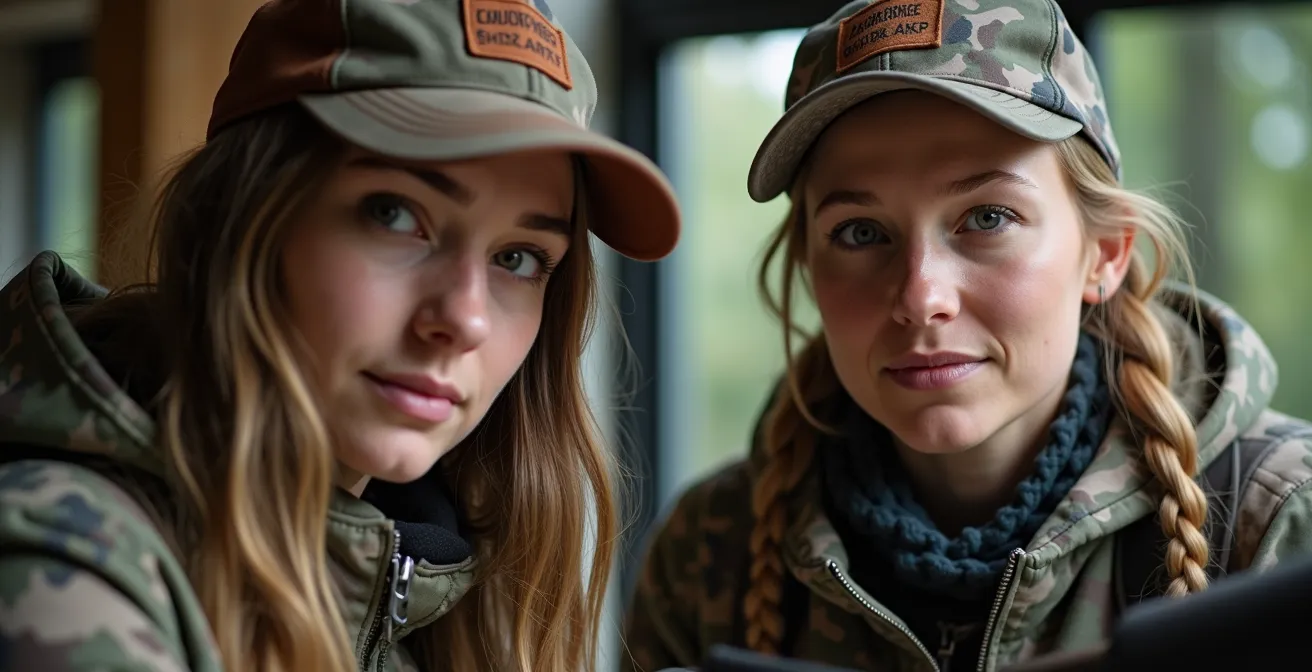
As Felicia Marie observed in Shooting Industry Magazine, the approach of these new hunters is distinctly different: “Women in the hunting community are eager to learn and have a strong sense of community. They come prepared, ask thoughtful questions and embrace mentorship.” This emphasis on collaboration and structured learning is dismantling the old “good ol’ boy” network. Organizations and social media groups led by women are creating safe, inclusive spaces where novices can learn everything from firearm safety to field dressing without fear of judgment. This shift from a tradition-based to a community-based model is making hunting more accessible and resilient than ever before.
The Hashtag Error That Fuels Anti-Hunting Sentiment
In an age of digital discourse, the public perception of hunting is shaped less in the field and more on the screen. For the new urban hunter, who is often navigating social circles where hunting is misunderstood, online representation becomes a critical act of cultural translation. A common mistake among traditional hunters is a failure to distinguish between “in-group” and “out-group” communication, particularly through the use of hashtags and imagery. This “hashtag error” often results in content that inadvertently fuels anti-hunting sentiment.
The “hero shot,” a photo that often depicts a hunter triumphantly posing with a harvested animal, is a classic form of in-group signaling. It celebrates the culmination of effort and skill, a message well-understood by other hunters. However, to an out-group observer—a non-hunting friend, family member, or the general public—this same image can be perceived as boastful, disrespectful, and a celebration of death. When paired with hashtags like #trophyhunter or #monsterbuck, it reinforces the most negative stereotypes about hunting culture.
The following table, based on insights from media analysis on hunter perception, contrasts these two approaches, highlighting how a shift in presentation can radically alter public interpretation. A study by Harvest Public Media further reinforces this, finding that many women felt unwelcome in spaces that emphasized trophy culture over the narratives of conservation and sustenance.
| Aspect | Hero Shot (Alienating) | Reverent Moment (Engaging) |
|---|---|---|
| Photo Composition | Hunter sitting on animal, tongue out | Hunter beside harvest, landscape focus |
| Caption Tone | Boastful, trophy-focused | Grateful, purpose-driven |
| Hashtag Strategy | #trophyhunter #monsterbuck | #fieldtotable #eatwhatyouhunt |
| Public Response | Perceived as celebrating death | Understood as food sovereignty |
The new generation of hunters, more attuned to the nuances of social media, is pioneering a different approach: the “reverent moment.” This involves photos that show respect for the animal, captions that express gratitude and reflect on the purpose of the hunt, and hashtags like #fieldtotable or #eatwhatyouhunt. This is not about hiding the reality of hunting, but about framing it accurately—as an act of accountable consumption and stewardship. This mindful communication is essential for bridging the cultural divide and ensuring hunting’s social license to operate in the 21st century. This insight is supported by an analysis of hunter representation in media.
When to Mentor a Non-Hunter to Ensure the Future of Conservation?
If the new urban demographic is the future of hunting, then mentorship is the mechanism by which that future will be secured. For this new wave of participants, who often lack a family connection to the activity, a mentor is not just a guide but a cultural translator. The critical question is not just *if* one should mentor, but *when* and *how*, to ensure the core values of conservation and ethics are instilled from the very beginning. The goal is to cultivate stewards, not just successful hunters.
While research confirms that adolescence is a key period for hunting introduction, the urban trend shows a surge in adult-onset hunters. This requires a different mentorship model, one that prioritizes ethical foundations over immediate success. A new hunter’s first experiences should not be focused on the harvest, but on developing what Aldo Leopold called a “land ethic”—an understanding of ecological systems, wildlife behavior, and the hunter’s role within them. Rushing a novice into a hunting situation without this foundation risks creating a participant who is focused only on the end result, not the process.
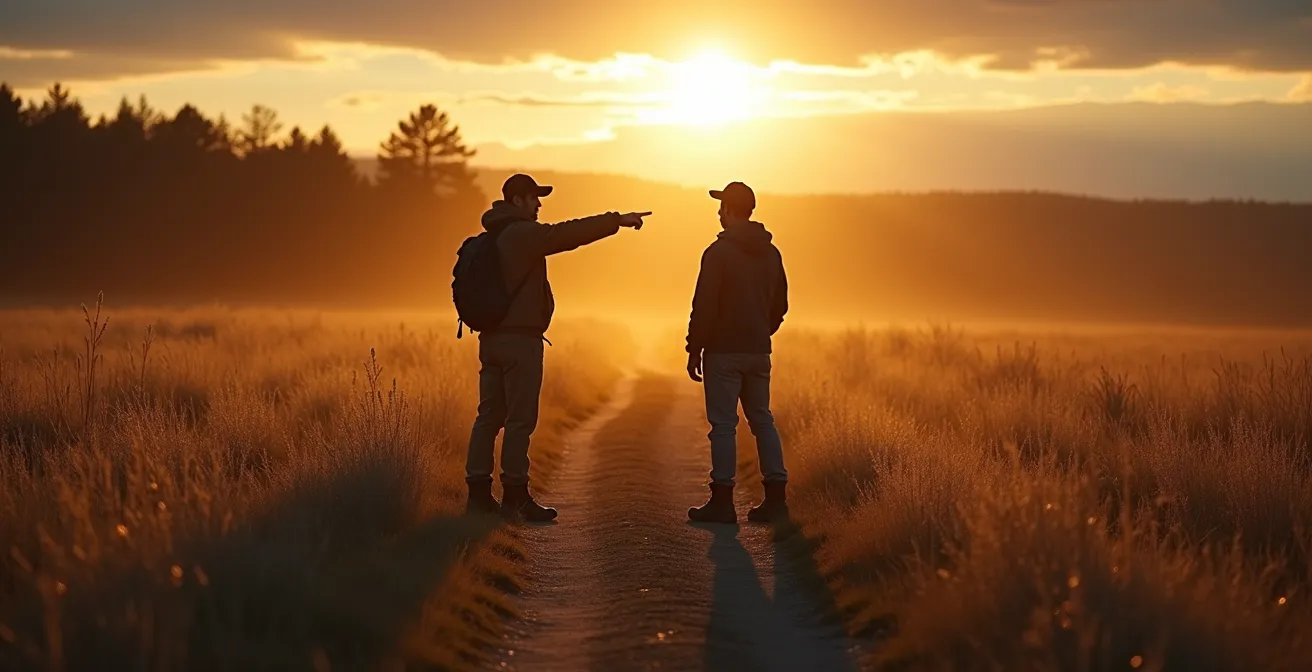
A phased approach is the most effective way to build this ethical framework. Mentorship should begin long before a hunt, with activities designed to build a holistic understanding and respect for the resource. The focus is on creating a conservationist who hunts, not just a hunter.
Your Action Plan: A Phased Mentorship Curriculum
- Nature Immersion: Start with nature hikes to scout terrain, identify wildlife signs, and simply practice quiet observation. This builds patience and connection.
- The Process of Provision: Introduce butchering and meat processing with already-harvested game before a live hunt. This directly connects the activity to food and demystifies the process.
- Safety and Competence: Dedicate significant time to practice at a shooting range. The goal is to build absolute confidence in firearm safety and marksmanship, ensuring any shot taken in the field is ethical.
- Observational Learning: Accompany the mentor on observation-only hunts. This allows the apprentice to experience the flow, ethics, and emotional weight of the hunt without the pressure to perform.
- The Mentored Hunt: Graduate to a mentored hunt only after the apprentice demonstrates a clear understanding of and commitment to conservation values and ethical principles.
How to Teach a New Angler to Care About the Resource, Not Just the Catch?
For many urbanites, fishing serves as a more accessible entry point into the world of consumptive outdoor recreation. The equipment is simpler, the regulations are often less complex, and the opportunities are more abundant. Sociologically, angling acts as a crucial “gateway” activity, providing the first hands-on lesson in the principles of conservation that are directly transferable to hunting. The central challenge, however, remains the same: shifting the participant’s mindset from an extractive focus on “the catch” to a stewardship focus on “the resource.”
A new angler’s excitement is naturally centered on catching a fish. An effective mentor channels this excitement toward a deeper understanding of the ecosystem that makes the catch possible. This involves teaching the “why” behind the “what.” Why are there size and bag limits? The mentor can explain fish life cycles and spawning patterns. Why is it important to handle a fish correctly during catch-and-release? The mentor can discuss the impacts of stress and injury on fish survival. Each rule becomes a lesson in applied ecology.
The ultimate goal is to foster a sense of personal ownership over the health of the aquatic environment. This is achieved by moving beyond mere compliance with regulations to active participation in stewardship. This includes simple acts like packing out more trash than you brought in, or more involved efforts like participating in local habitat restoration projects. As US Fish & Wildlife Service representative Tom Decker notes, “Understanding demographics and associated behaviors can inform current and future R3 [Recruitment, Retention, and Reactivation] efforts.” By teaching new anglers to see the fishery as a dynamic system they are part of, we cultivate a conservation ethic that lasts a lifetime and provides a solid foundation for a potential transition into hunting.
Why Wild Game Meat Is Superior to Store-Bought Organic Beef?
The urban hunter’s rebellion against the industrial food system is not purely philosophical; it is also grounded in tangible, scientific benefits. When comparing wild game meat to even the highest-quality, store-bought “organic” beef, the nutritional and environmental superiority of wild-harvested protein becomes strikingly clear. This evidence provides a powerful, rational justification for the ethical and emotional decision to hunt.
From a nutritional standpoint, wild game is fundamentally different. Animals that live in the wild have leaner, more athletic bodies. As nutritional research demonstrates, wild game averages just 4.3% fat, compared to 25-30% in similarly-raised domestic beef. This is not just about total fat; it’s about the *type* of fat. Research from Purdue University on Rocky Mountain elk and deer found that wild game possesses significantly higher levels of beneficial omega-3 fatty acids and a healthier omega-6 to omega-3 ratio, which is directly linked to reducing the risk of chronic diseases.
This side-by-side comparison reveals a clear winner not only for personal health but also for environmental impact. While organic beef farming is an improvement over conventional methods, it still requires immense inputs of land, water, and resources. Wild game, by contrast, is a byproduct of a healthy, functioning ecosystem. Its existence requires no agricultural inputs, and its harvest, when managed scientifically, is part of a sustainable cycle.
The following table, drawing from an analysis of food wellness sources, breaks down the key advantages:
| Nutrient | Wild Venison | Organic Beef | Health Impact |
|---|---|---|---|
| Total Fat | 1% | 11% | Lower cardiovascular risk |
| Omega-3 Ratio | Superior | Standard | Anti-inflammatory benefits |
| Iron Content | 33% DV per serving | 25% DV per serving | Better oxygen transport |
| Environmental Impact | Net-zero/positive | High resource use | Sustainable protein source |
For the modern urban hunter, every meal of wild game is a reaffirmation of their choice. It is food that is not only earned and understood but is also demonstrably better for their body and for the planet. This closes the loop on accountable consumption, making the act of hunting a holistic commitment to personal and ecological well-being.
Key Takeaways
- The rise of the urban hunter is a sociological response to anxieties about the industrialized food system, driven by a quest for “ecological sovereignty.”
- This new demographic, with a significant female presence, is shifting hunting culture from a tradition-based model to an inclusive, community-based learning environment.
- Mindful online representation and a stewardship-first mentorship model are critical for the social acceptance and sustainable future of hunting.
How Hunting Transforms from Pursuit to Stewardship in Modern Conservation?
The journey of the new urban hunter culminates in a profound transformation: the activity ceases to be a mere pursuit of game and becomes a dedicated practice of stewardship. This evolution is the cornerstone of modern conservation and the ultimate answer to why this demographic shift matters. These new participants are not just funding conservation through license fees; they are becoming its most engaged and articulate advocates, embodying a new ethic of intentional stewardship.
The financial contribution of hunters to conservation is immense. For instance, economic data shows that $848.3 million was generated by the hunting industry in 2022 alone, directly funding wildlife management, habitat restoration, and scientific research through mechanisms like the Pittman-Robertson Act. However, the contribution of the new urban hunter goes beyond the transactional. By choosing to participate, they are making a cultural investment. They are learning to read landscapes, understand population dynamics, and appreciate the delicate balance of ecosystems. They become citizen-scientists and on-the-ground monitors of environmental health.
This hands-on engagement creates a level of commitment that passive environmentalism cannot replicate. The hunter who has worked to restore a wetland feels its value more acutely than someone who simply donates online. The person who has tracked a deer for days has a deeper respect for its resilience. This direct, personal connection is what transforms a participant into a fierce protector of the resource. They understand that without healthy habitats and thriving wildlife populations, the activity they value ceases to exist.
I think there’s a lot of audiences out there that have an interest, and just haven’t had the avenue or haven’t been asked. Maybe they don’t even know they’re interested yet.
– Swanny Evans, US Fish & Wildlife Service Biologist
The emergence of the urban hunter is the answer to this observation. They are the interested audience that is now finding its avenue. By embracing the responsibilities of the hunt, they are not only feeding themselves and their families with clean, sustainable protein; they are ensuring that the wild places and the animals that inhabit them continue to thrive for generations to come. Their pursuit becomes a promise of preservation.
This cultural shift represents more than a trend; it signals a maturing relationship between modern society and the natural world. To participate in this movement, whether as a mentor or a novice, is to take an active role in the future of conservation. The next logical step is to find a local conservation organization or mentorship program and begin the journey.
Frequently Asked Questions About Modern Hunting and Conservation
Why are fishing regulations important for conservation?
Regulations like slot limits and seasonal restrictions are based on fish life cycles and population dynamics, ensuring sustainable harvest levels. They are not arbitrary rules but scientific tools designed to protect spawning seasons and prevent over-harvesting, allowing fish populations to remain healthy and resilient for the future.
How can anglers contribute beyond following rules?
Active participation includes removing trash from waterways, practicing proper catch-and-release techniques to maximize fish survival, reporting pollution or poaching, and participating in habitat restoration projects organized by local conservation groups. These actions move an individual from a passive user to an active steward of the resource.
What’s the connection between fishing and hunting ethics?
Fishing serves as an accessible entry point to understanding core conservation principles. Concepts learned through angling, such as carrying capacity (the number of individuals an environment can support), the importance of selective harvest, and the ethics of a quick, humane dispatch, provide a direct and transferable ethical foundation for those who later choose to advance to hunting.