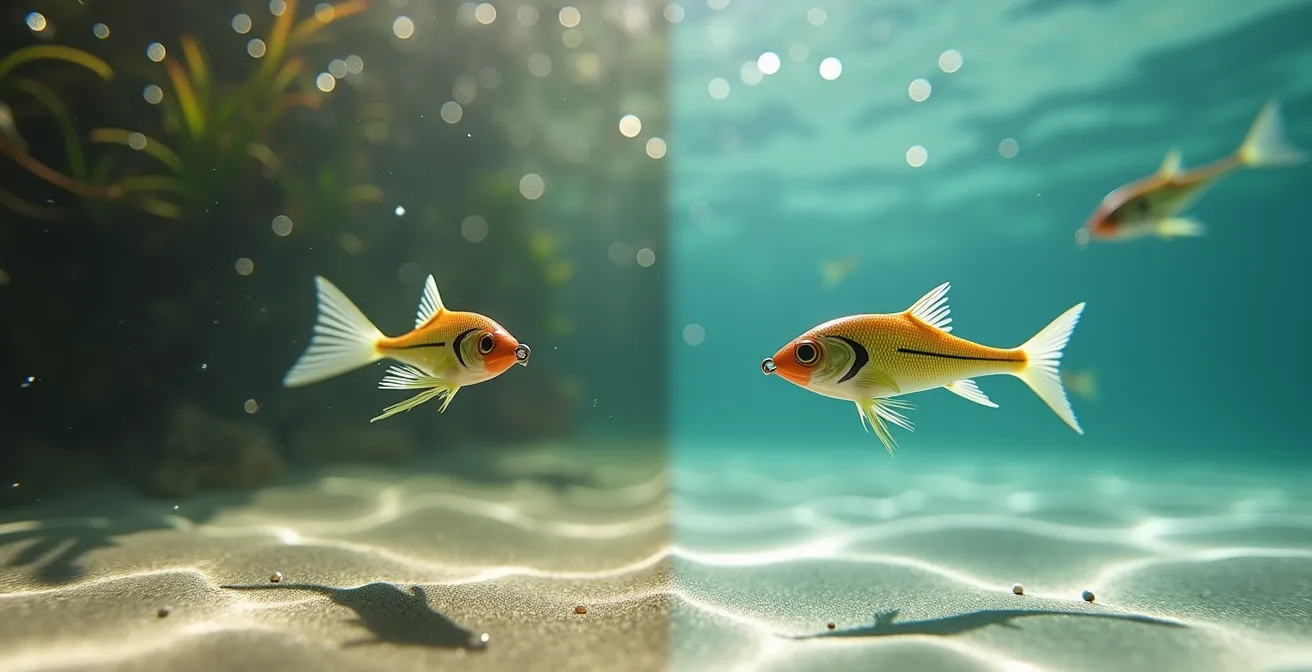
The “biodegradable” label on a fishing lure is often misleading; the real environmental impact is determined by its specific polymer chemistry and how it behaves inside a fish’s digestive system.
- Standard PVC soft plastics are indigestible, causing fatal gastric obstructions, and can persist for centuries as microplastics.
- True bioplastics and natural baits (dough, gelatin) break down via hydrolysis and microbial action, either being digested or dissolving in weeks.
Recommendation: Prioritize lures made from natural, digestible materials or water-soluble polymers like PVA, and understand that even bioplastics are no substitute for responsible angling that minimizes gear loss.
As an environmentally conscious angler, the thought of a lost lure sitting at the bottom of a pristine lake is unsettling. We’ve all been told to switch to “bioplastics” to solve the problem, but this advice barely scratches the surface. The dialogue around lure pollution often stops at physical trash, ignoring the more critical questions: What happens when a fish ingests that lure? What chemicals are leaching into the water? As a polymer chemist, I can tell you that not all plastics are created equal, and the term “biodegradable” can be dangerously vague. The key to reducing our impact isn’t just about choosing a different product; it’s about understanding the material science behind it.
The true measure of a lure’s environmental cost isn’t just how long it takes to disappear from sight, but its entire lifecycle—from its interaction with aquatic life to its ultimate chemical fate. Standard soft plastics, made from Polyvinyl Chloride (PVC), are a marvel of engineering for durability, but a disaster for ecosystems. Their long, tightly-bound polymer chains are impervious to digestive enzymes. Conversely, materials based on starches or specific biopolymers are designed with chemical triggers that allow them to be broken down. This article moves beyond marketing labels to provide a chemical analysis of what really happens to your gear, empowering you to make choices based on scientific reality, not just good intentions.
This guide will deconstruct the materials in your tackle box from a chemical perspective. We’ll explore why some materials cause fatal blockages in fish while others pass harmlessly. We’ll examine the hidden dangers of long-lasting lines and introduce truly sustainable alternatives that you can even make yourself. By understanding the science, you can become a more effective conservationist on the water.
Summary: A Deeper Dive into Your Tackle Box’s Environmental Footprint
- Why Dough Baits Are Safer for Digestive Systems Than PVC Plastics?
- How to Organize Your Tackle Without Single-Use Plastic Bags?
- How Many Years Does It Take for Fluorocarbon to Break Down?
- Why Making Your Own Biodegradable Chum Is Better/Cheaper?
- How to Use PVA Bags to Deliver Bait Without Leaving Residue?
- The Trash Habit That Contaminates Pristine Backcountry Water Sources
- Why Switching to Copper Ammo Is the Single Biggest Eco-Move You Can Make?
- How Anglers Can Stop the Spread of Invasive Aquatic Plants?
Why Dough Baits Are Safer for Digestive Systems Than PVC Plastics?
When a fish swallows a lure, the crucial question is not whether it’s “plastic,” but whether its molecular structure can be broken down by digestive processes. The difference between a PVC worm and a simple dough ball is a fundamental distinction in polymer chemistry. PVC is a synthetic polymer with incredibly strong carbon-chlorine bonds, rendering it completely resistant to the acids and enzymes in a fish’s stomach. It acts like a foreign object, leading to gastric obstruction, internal ulcerations, and eventual starvation. The lure remains intact, preventing the fish from processing real food.
In contrast, dough baits, made from flour, oats, or cornmeal, are composed of natural polymers like starches and proteins. These materials are designed by nature to be broken down. Their polymer chains are susceptible to hydrolysis (breakdown by water) and enzymatic attack. For a fish, ingesting a dough bait is no different from eating natural food. Even some engineered bioplastics offer a significant improvement. An innovative high school student developed a gelatin-based soft plastic that, if lost, will decompose in about 16 days in water. The digestibility of common baits follows a clear hierarchy:
- Highly Digestible: Natural dough baits (flour, oats, corn) break down completely.
- Moderately Digestible: Gelatin-based bioplastic lures dissolve relatively quickly.
- Minimally Digestible: Some commercial baits with heavy preservatives may only partially break down.
- Indigestible: PVC soft plastics remain in the stomach, causing fatal blockages.
- Completely Indigestible: Hard plastic and metal lures cannot be broken down and must be expelled.
Choosing a digestible material is a direct intervention to prevent mortality from lure ingestion. It shifts the focus from a durable tool for the angler to a safe component of the aquatic food web if lost. This single choice has a more immediate and profound impact on fish survival than nearly any other gear decision.
How to Organize Your Tackle Without Single-Use Plastic Bags?
The commitment to reducing plastic pollution extends beyond lures to how we manage our entire tackle collection. The flimsy, single-use plastic bags used to separate hooks, swivels, and soft baits are a significant source of microplastic pollution. They tear easily, get blown into the water, and take centuries to degrade. Shifting to a sustainable organization system is not just an environmental statement; it’s a practical upgrade in durability and long-term cost-effectiveness. The goal is to adopt a material lifecycle mindset, choosing containers that are reusable, repairable, or naturally biodegradable.
Options range from simple upcycling to lifetime-quality investments. Repurposing mint tins for small tackle or using durable, food-grade silicone pouches eliminates waste and prevents chemical reactions between lures and cheap plastic. For the dedicated angler, modular boxes made from wood or metal offer a buy-it-for-life solution that is both functional and aesthetically pleasing. These materials are not only more durable but also have a clear and non-toxic end-of-life pathway—wood can biodegrade, and metal can be infinitely recycled. Moving away from brittle, disposable plastic boxes that crack and shed microplastics is a critical step.
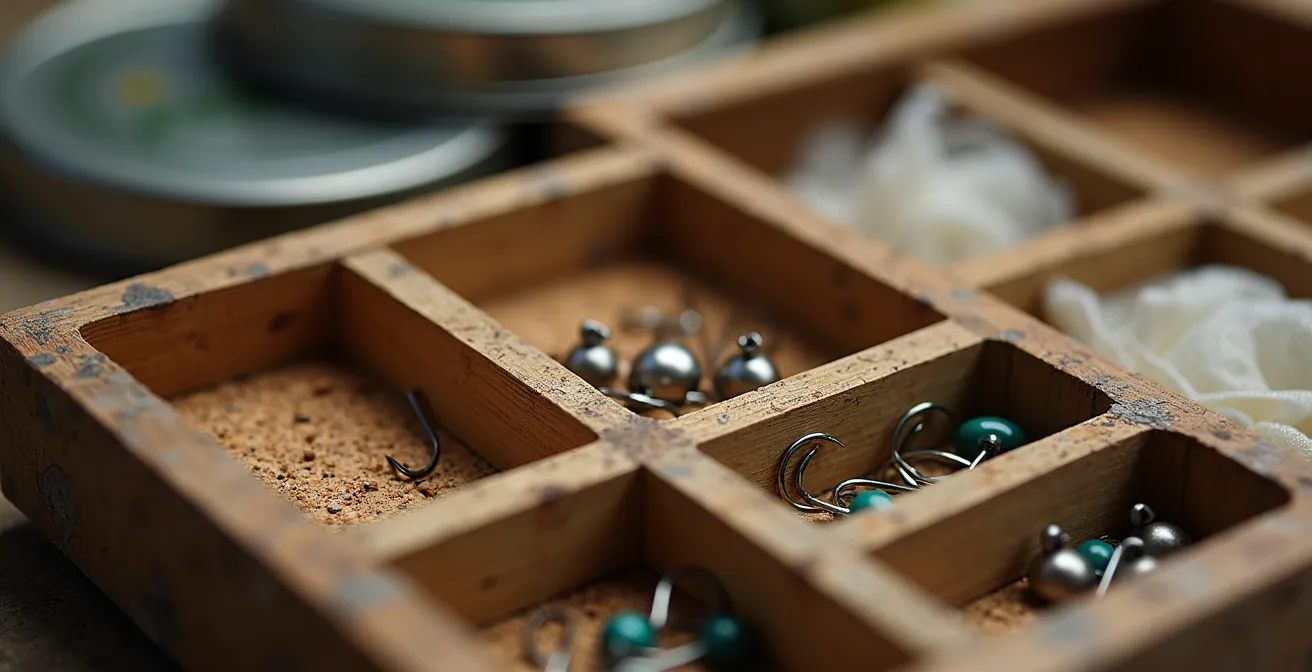
This image showcases the tactile and practical appeal of sustainable tackle storage, emphasizing natural textures like wood and cork over sterile plastic. The following table provides a clear comparison of common storage solutions, weighing their lifespan against their environmental cost. As an analysis of gear impact shows, initial cost is often inversely proportional to long-term environmental harm.
| Storage Type | Lifespan | Environmental Impact | Cost |
|---|---|---|---|
| Single-use plastic bags | 1-3 uses | 450+ years to decompose | $ |
| Brittle plastic boxes | 1-2 years | Non-recyclable, breaks into microplastics | $$ |
| Silicone pouches | 10+ years | Reusable, non-reactive with lures | $$$ |
| Modular wood/metal boxes | Lifetime | Repairable, biodegradable/recyclable | $$$$ |
| Upcycled containers | 5+ years | Zero waste, repurposed materials | Free |
How Many Years Does It Take for Fluorocarbon to Break Down?
Fluorocarbon fishing line is prized for its near-invisibility in water and high tensile strength, but these performance benefits come at a steep environmental cost. Made from polyvinylidene fluoride (PVDF), its chemical structure is one of the most persistent polymers ever created. Unlike nylon monofilament, which can slowly absorb water and break down over decades, fluorocarbon is completely hydrophobic and resistant to UV degradation. Estimates for its breakdown in an aquatic environment range from hundreds to potentially thousands of years, making a lost line a permanent fixture of the ecosystem.
The concern goes beyond physical pollution and entanglement risk. Fluorocarbon is a type of PFAS (per- and polyfluoroalkyl substance), a class of “forever chemicals” known for their extreme persistence and potential toxicity. While the line itself is stable, the manufacturing process and potential for long-term leaching raise serious questions about introducing these compounds into waterways. The very properties that make it an excellent fishing line—its chemical inertness and stability—are what make it an environmental menace. This presents a direct conflict between angling effectiveness and ecological stewardship.
Fluorocarbon fishing line does not absorb water, stays invisible in water, and offers high tensile strength. Although fishing lines made of other materials may not be as effective, they can prevent PFAS from entering water or the fish we catch.
– Renouvo Environmental Research, What products contain PFAS and alternatives
This highlights the difficult trade-off anglers face. While modern alternatives like braided lines made from materials like Dyneema are stronger and thinner, they are also synthetic and persistent. The most eco-friendly choices would be a return to natural fibers like silk or the development of new, truly biodegradable polymer lines (based on materials like PHA). However, these currently do not match the performance of fluorocarbon. The decision to use fluorocarbon should therefore be made with a full understanding of its near-permanent impact on the environment.
Why Making Your Own Biodegradable Chum Is Better/Cheaper?
Chumming, the practice of dispersing bait to attract fish, can be a source of pollution if done with commercial products full of non-biodegradable fillers, artificial dyes, and chemical preservatives. These additives can degrade water quality and introduce unnatural substances into the food web. The alternative—making your own chum from simple, natural ingredients—is not only vastly superior for the environment but also significantly more cost-effective. A DIY approach gives you full control over the ingredients, ensuring everything you put in the water is 100% biodegradable and serves as natural forage for aquatic life.
The core principle is to use locally relevant and readily available materials. Stale bread, rolled oats, cracked corn, and kitchen scraps like vegetable peels are excellent bases. These ingredients break down quickly through microbial action, enriching the local ecosystem rather than polluting it. You can even incorporate fish trimmings from a previous catch, recycling waste into a potent attractant. This method transforms chumming from a potentially harmful practice into a sustainable one that mimics natural feeding patterns.
The economic argument is just as compelling. Commercial chum can be expensive for small quantities. In contrast, by using leftover food items and bulk grains, you can produce a large volume of high-quality chum for a fraction of the cost. It is estimated that making a batch of 20-30 lbs of homemade chum can cost the same as buying a mere 5 lbs of a pre-made commercial version. This simple switch saves money, reduces food waste, and protects the aquatic environment.
Your Action Plan: DIY Biodegradable Carp Chum Recipe
- Establish the Base: In a bucket, mix 2 cups of rolled oats with 1 loaf of stale bread, torn into small pieces. This provides the bulk and a slow-dissolving structure.
- Incorporate Local Grains: Add 1 cup of cracked corn or another local grain that is part of the target species’ natural diet. This enhances the attraction.
- Add a Natural Binder: Use 1 can of creamed corn. Its consistency helps bind the mixture together while its scent is a powerful attractant.
- Utilize Kitchen Scraps: Integrate finely chopped vegetable peels or stale breadcrumbs from your kitchen to reduce waste and add varied texture.
- Recycle Fish Waste: If you have them, add fish trimmings (heads, bones, skin) from a previous catch. This is a highly effective, natural scent carrier.
How to Use PVA Bags to Deliver Bait Without Leaving Residue?
For anglers seeking precision bait delivery without leaving a trace, Polyvinyl Alcohol (PVA) offers a fascinating material science solution. PVA is a water-soluble synthetic polymer. Unlike conventional plastics, its chemical structure is designed to be broken apart by water molecules through hydrolysis. When a PVA bag or mesh stocking filled with bait is cast into the water, it doesn’t “biodegrade” in the traditional sense; it dissolves. The polymer chains unravel and disperse in the water, ultimately breaking down into non-toxic components.
This property makes PVA an ideal tool for eco-conscious baiting. It allows an angler to create a highly concentrated pile of free offerings (like pellets or crushed boilies) directly around their hook bait. The bag ensures the bait reaches the bottom intact, even at long range, before dissolving completely within a few minutes, depending on water temperature. The result is a perfect bait presentation with absolutely zero physical residue left behind—no plastic fragments, no persistent pollutants. This is “leave no trace” angling at a molecular level.
Proper use is key to its effectiveness and environmental safety. It’s crucial to use PVA systems specifically designed for fishing, as these are formulated for rapid and complete dissolution. The system works best with dry baits, as any moisture will begin to break down the PVA prematurely. By storing PVA bags and bait in a dry, sealed container, anglers can ensure the system functions perfectly when deployed. It represents a smart use of chemistry to solve a practical fishing problem while completely eliminating associated waste.
The Trash Habit That Contaminates Pristine Backcountry Water Sources
The focus on lost lures and lines can sometimes obscure a more insidious and widespread habit: the casual discarding of small “pocket trash.” In remote, backcountry locations, even the tiniest piece of synthetic waste can have an outsized impact on a fragile ecosystem. These are environments with minimal human traffic and slow decomposition rates. A single plastic wrapper from a granola bar, a snipped-off tag end of leader, or a discarded cigarette butt can persist for decades, becoming a permanent, ugly fixture.
The problem is one of accumulation and scale. While one small piece of trash may seem insignificant, it contributes to a creeping contamination. These items don’t just sit there; they fragment under UV light and physical abrasion, creating a localized source of microplastics. These tiny particles can be ingested by insects and small fish, entering the food chain at its very base. Unlike a dense lure that sinks, lightweight plastics like wrappers can float, traveling far from their point of origin and polluting large areas of a watershed.
The solution is a mindset of absolute responsibility: “pack it in, pack it out.” This means having a dedicated, sealable trash bag for every single piece of non-natural material brought into the backcountry. This includes not just obvious trash like food packaging but also the tiny, often-forgotten byproducts of angling—small snips of line, used strike indicators, and broken plastic lure pieces. In a pristine environment, there is no “small” piece of trash. Every angler acts as a steward, and the habit of meticulously collecting all waste is the most fundamental act of conservation in these special places.
Key Takeaways
- A lure’s material chemistry, not just its “biodegradable” label, determines its true impact on fish and ecosystems.
- Indigestible PVC plastics cause fatal gastric obstructions, while natural baits and true bioplastics break down safely.
- Persistent materials like fluorocarbon and single-use plastics contribute to long-term physical and chemical pollution (PFAS, microplastics).
Why Switching to Non-Toxic Tackle Is a Critical Eco-Move?
While the article title mentions copper ammo, a critical parallel in the angling world is the switch from lead to non-toxic alternatives for sinkers and jigs. For decades, lead has been the material of choice due to its high density, low cost, and malleability. However, lead is a potent neurotoxin. When a lead sinker is lost, it slowly leaches into the aquatic environment, contaminating water and sediment. Waterfowl and other animals can mistake small split shot for grit, ingesting it with fatal consequences. A single lost sinker can poison a small area for years.
The environmental science is clear: there is no safe level of lead in an ecosystem. Recognizing this, many regions have banned or restricted the use of lead tackle. The responsible choice for anglers is to proactively switch to non-toxic materials. The primary alternatives include tungsten, steel, and bismuth. Tungsten is even denser than lead, allowing for smaller, more sensitive weights, though it comes at a higher price. Steel is an affordable, though much less dense, alternative suitable for many applications. Bismuth offers a density close to lead without the toxicity.
This transition is identical to the shift away from PVC plastics: it requires prioritizing ecosystem health over marginal cost or convenience. While non-toxic sinkers may require a larger initial investment, this cost is trivial compared to the long-term damage caused by introducing a persistent neurotoxin into our waterways. Making the switch is one of the single most impactful decisions an angler can make to prevent direct chemical poisoning of the environments they cherish. It’s a proactive measure that eliminates a known toxic threat at its source.
How Anglers Can Stop the Spread of Invasive Aquatic Plants?
Beyond chemical and plastic pollution, anglers can unwittingly become vectors for biological pollution by spreading invasive aquatic species. Plants like Eurasian watermilfoil and animals like zebra mussels can hitch a ride on boats, trailers, and even individual pieces of fishing gear. A single plant fragment caught on a lure or a microscopic mussel veliger in a livewell can be transported to a new body of water, where it can establish a new population, outcompete native species, and devastate the ecosystem.
The mechanism of transfer is often microscopic. Your fishing line, waders, or the felt soles of your boots can harbor tiny organisms or seeds. Lures with complex shapes or braided lines with their textured surfaces are particularly effective at trapping and transporting plant matter. Preventing this spread requires a rigorous hygiene protocol known as “Clean, Drain, Dry.” This isn’t just a suggestion; in many places, it’s the law. It’s a systematic process to ensure your gear is free of contaminants before entering a new waterway.
First, Clean all visible mud, plants, and debris from your boat, trailer, and all gear. A pressure washer is effective for larger equipment. For tackle, a stiff brush and clean water are essential. Second, Drain all water from your boat, including the motor, livewell, and bilge. This eliminates the water that can transport microscopic organisms. Finally, Dry everything completely. If you can, allow your gear to dry in the sun for at least five days before moving to a new body of water. If that’s not possible, washing gear with hot (140°F / 60°C) water can also be effective. This disciplined approach is the only way to ensure you are not part of the problem, protecting the fisheries you love from the threat of biological invasion.
By shifting our focus from simple convenience to material science, we, as anglers, can make profound improvements in the health of our waterways. The next time you choose a lure, a sinker, or even a storage bag, consider its chemical story. This deeper understanding is our most powerful tool for conservation. To put these principles into practice, the logical next step is to conduct a thorough audit of your own tackle box and identify which items can be replaced with safer, more sustainable alternatives.