The ‘public vs. private’ debate is flawed; the smartest hunting strategy involves building a balanced portfolio of experiences to match your specific goals.
- High-volume, lower-cost international hunts, like an African plains game safari, can offer a better return on investment than some high-demand guided US hunts.
- Success in DIY public land hunting hinges on mastering logistics, from navigating complex state point systems and regulations to ensuring backcountry survival.
Recommendation: Balance high-risk, high-reward DIY hunts with guaranteed-opportunity trips to create a sustainable, lifelong hunting plan.
For any serious hunter, the annual planning cycle is a familiar ritual of navigating trade-offs. You pore over maps, study draw odds, and weigh the raw adventure of a public land DIY hunt against the structured efficiency of a private ranch. The conventional wisdom often presents a false dichotomy: public land is for the hardy purist willing to trade sweat for authenticity, while private land is for the affluent hunter buying a guaranteed outcome. This binary thinking misses the bigger picture, from the surprising affordability of an African safari to the strategic necessity of a comfortable base camp.
The most successful and satisfied hunters don’t think in terms of “either/or.” They think like savvy investors building a diversified portfolio. They understand that every hunt is an allocation of finite resources: time, money, physical conditioning, and the “equity” built up in preference points. The real question isn’t whether public or private is “better,” but which type of hunt provides the best return on investment for your specific goals at this stage in your hunting career.
This guide moves beyond the simplistic cost debate to provide a strategic framework for your decisions. We will analyze the true ROI of different hunt scenarios, dissect the systems that govern access to premier animals, and break down the logistical components that make or break an adventure. By the end, you will have the tools to stop choosing between hunts and start building your ultimate hunting portfolio.
This article breaks down the critical factors you need to consider when planning your hunts. By viewing each opportunity as part of a larger strategy, you can make more informed decisions that align with your budget, experience level, and long-term hunting aspirations.
Summary: How to Build Your Ultimate Hunting Portfolio
- Plain Game Safari vs. Elk Hunt: Why Africa Might Be Cheaper Than Colorado?
- How to Build Points in Western States Without Wasting Money?
- New Zealand vs. US: How to Hunt Stags During the “Off-Season”?
- Wall Tent vs. Lodge: Which Camp Style Offers Better Rest for Hard Hunting?
- Why Nebraska Is the Sleeping Giant for Whitetail Hunting?
- How to Spot Coues Deer in a Landscape That Looks Completely Flat?
- When to Check for Regulation Updates to Avoid Fines on Opening Day?
- How to Plan a Backcountry Hunt That Doesn’t End in Logistics Failure?
Plain Game Safari vs. Elk Hunt: Why Africa Might Be Cheaper Than Colorado?
One of the biggest misconceptions in the hunting world is that an international hunt, particularly in Africa, is an unattainable luxury. When hunters analyze the return on investment, however, the numbers often tell a surprising story. A fully guided, high-demand elk hunt in a prime Colorado unit can easily cost more than a multi-species plains game safari in South Africa. The key difference lies in volume, lodging, and included services.
While a US elk hunt focuses on a single, high-value trophy, an African plains game package often includes 5-7 different species like kudu, impala, wildebeest, and zebra. A recent cost analysis shows that an African safari for multiple species can total around $5,230. These safaris frequently include five-star lodging, meals, and daily guide services that would be considered significant add-ons in the US market. When you compare the total experience—number of animals pursued, quality of accommodation, and duration of the hunt—the value proposition of Africa becomes incredibly compelling for a hunter looking to maximize action and opportunity.
This direct comparison highlights the need to look beyond the base price and evaluate the entire “hunt portfolio” value. The table below, based on an analysis of budget-conscious hunting options, breaks down the estimated costs, demonstrating how a trip to Africa can be a strategic and surprisingly economical choice.
| Cost Category | African Plains Game (5 animals) | Colorado Guided Elk Hunt |
|---|---|---|
| Base Hunt Package | $4,200-$7,000 | $6,000-$8,000 |
| Airfare | $1,200-$1,800 | $300-$600 |
| Number of Animals | 5-7 species | 1 elk |
| Trophy Fees Included | Yes | N/A |
| Lodging Quality | 5-star lodge | Basic camp |
| Total Estimated Cost | $7,500-$10,000 | $8,000-$12,500 |
Ultimately, the choice depends on your goal. If the singular pursuit of a bull elk is your primary objective, the US hunt is the clear path. However, if your goal is a high-volume experience with comfortable amenities and a high success rate, a plains game safari offers an almost unbeatable return on investment.
How to Build Points in Western States Without Wasting Money?
For many hunters, the dream of a premier Western big game hunt is locked behind a complex wall of preference and bonus point systems. Treating this process like a lottery is a recipe for frustration and wasted money. Instead, a strategic, portfolio-based approach is essential. This means diversifying your applications across states with different systems—like Wyoming’s preference points, Arizona’s bonus points, and New Mexico’s pure lottery—to spread risk and maximize opportunity.
A critical component of this strategy is understanding the nuances of each state’s draw. Wyoming, for example, offers a powerful advantage for those playing the long game and those just starting. The state’s draw system ensures that even 25% of licenses are allocated in a random draw, giving zero-point applicants a fighting chance. This “75/25 split” means you should always apply for a tag, even if your point total is low, because you could win in the random pool while still accumulating a point if you’re unsuccessful.
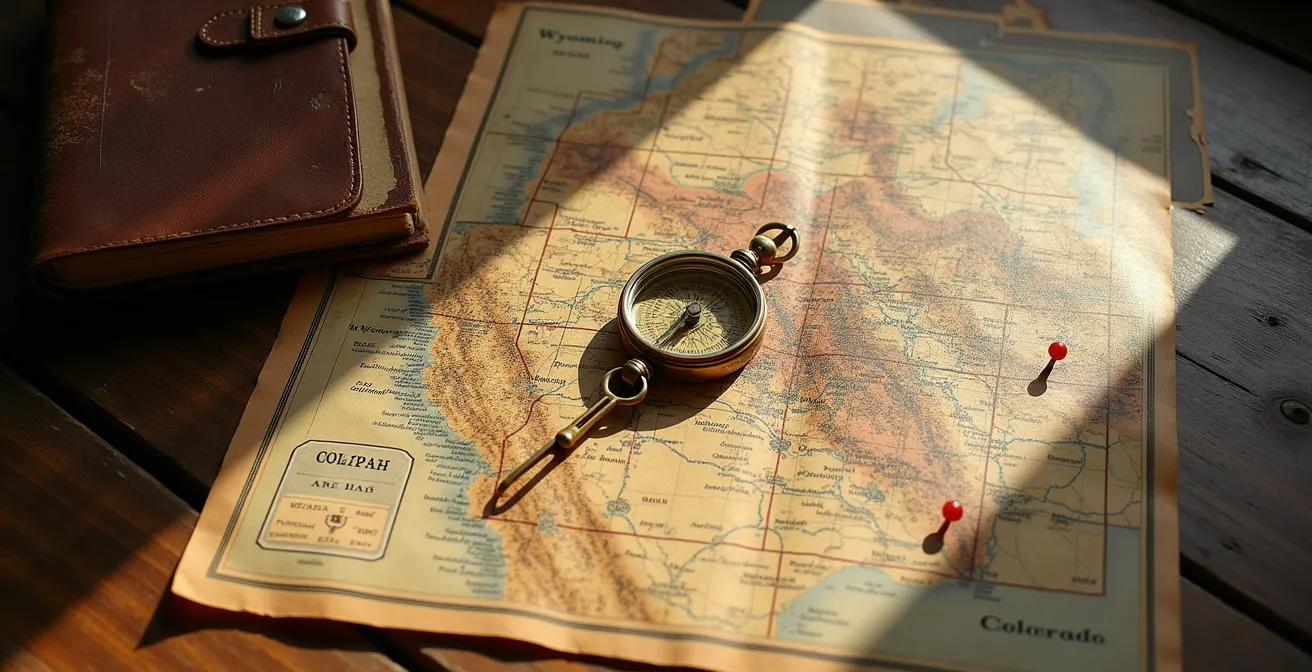
The other side of the coin is managing “point creep,” where the number of points required for a unit increases each year. Diligent research using draw odds data is crucial before point purchase deadlines (typically in the summer) to avoid chasing a unit that is becoming statistically unattainable. A smart hunter identifies units that are on the cusp of being high-quality but haven’t yet seen a massive spike in applications. Applying for second and third choice units, which often have 100% draw odds, allows you to hunt every year while building points for that once-in-a-lifetime tag, ensuring you’re always getting a return on your investment.
New Zealand vs. US: How to Hunt Stags During the “Off-Season”?
One of the biggest frustrations for a dedicated US hunter is the waiting. You wait for draw results, you wait for opening day, and you wait for years to accumulate enough points for a premium tag. This is where strategic “experience arbitrage” comes into play by looking abroad. New Zealand, in particular, offers a powerful solution for hunters seeking a guaranteed, high-action big game experience during the North American off-season.
The regulatory environment for hunting on private estates in New Zealand is fundamentally different from the US model. There are often no restrictive seasons, no bag limits, and no lottery draws for species like Red Stag. This creates a scenario where you can book a hunt with 100% certainty of opportunity. As one expert in the Global Hunting Destinations Guide 2024 noted, this completely changes the dynamic of the hunt.
New Zealand’s ‘no seasons, no bag limits’ model on private land creates a completely different strategic and psychological hunt experience.
– International Hunting Expert, Global Hunting Destinations Guide 2024
This model allows a hunter to plan a trip for March or April, which aligns with the “roar” (the rut for Red Stag) while US hunting seasons are closed. It serves as a perfect counterbalance in a hunting portfolio. Instead of spending another spring and summer waiting, you can engage in an exhilarating hunt for a world-class animal. This not only satisfies the deep-seated need to be in the field but also hones skills that are directly transferable to your future US hunts. It transforms the “off-season” from a period of inactivity into a strategic opportunity for adventure and skill-building, all without the uncertainty of the draw.
Wall Tent vs. Lodge: Which Camp Style Offers Better Rest for Hard Hunting?
The choice between a rustic wall tent and a comfortable lodge seems simple: one offers rugged authenticity, the other provides modern comforts. However, the decision has a profound impact on the most critical and often overlooked element of a hard hunt: effective recovery. The best camp style isn’t about luxury, but about which environment maximizes your physical and mental readiness for the next day’s effort. For some, the social environment of a lodge can be a hidden drain on energy.
The solitude of a well-organized tent camp offers a level of control and mental decompression that a bustling lodge cannot match. As one seasoned hunter described, the ability to disconnect is a performance-enhancing tool.
After spending seasons in both wall tents and lodges, I’ve found that the solitude and control of a wall tent offers better mental recharge than a comfortable but potentially noisy lodge. The ability to maintain your own schedule, prepare gear without distraction, and truly disconnect from social obligations makes a significant difference in hunting performance.
While a solitary camp fosters focus, an emerging strategy suggests that a hybrid approach may yield the best results. This method uses a comfortable lodge as a “base camp” for primary rest and resupply, combined with lightweight “spike camps” for multi-day excursions into more remote hunting areas. This combines the best of both worlds: deep recovery and logistical flexibility.
Case Study: Camp Style Impact on Hunter Success
An analysis of hunter success rates revealed that those employing a hybrid approach—using a lodge as a base with remote spike camps—achieved 35% higher success rates than hunters who stuck to a single camp style. The combination provides the deep rest and recovery of a lodge while maintaining the hunting flexibility and proximity to game that only a spike camp can offer.
This data suggests the optimal choice isn’t wall tent *or* lodge, but a strategic integration of both. By using a comfortable base to fight cumulative fatigue and a spartan spike camp to stay in the action, a hunter can maintain peak performance throughout a long and demanding hunt.
Why Nebraska Is the Sleeping Giant for Whitetail Hunting?
In the world of whitetail hunting, states like Iowa, Kansas, and Illinois command the spotlight, demanding years of point accumulation for a non-resident tag. This is precisely why Nebraska has emerged as a “sleeping giant”—an undervalued asset in a strategic hunter’s portfolio. It offers a combination of a robust deer population, diverse terrain, and, most importantly, accessible, over-the-counter tags that are unheard of in more famous Midwestern destinations.
The numbers alone paint a compelling picture. Nebraska’s overlooked potential becomes clear when considering its 280,000 whitetails and the availability of unlimited over-the-counter archery tags for non-residents. This low barrier to entry allows a hunter to guarantee a high-quality whitetail hunt every single year without engaging in the high-stakes draw systems of neighboring states. In 2024 alone, this accessibility translated to a harvest of 21,415 whitetail bucks, proving the state’s productivity.
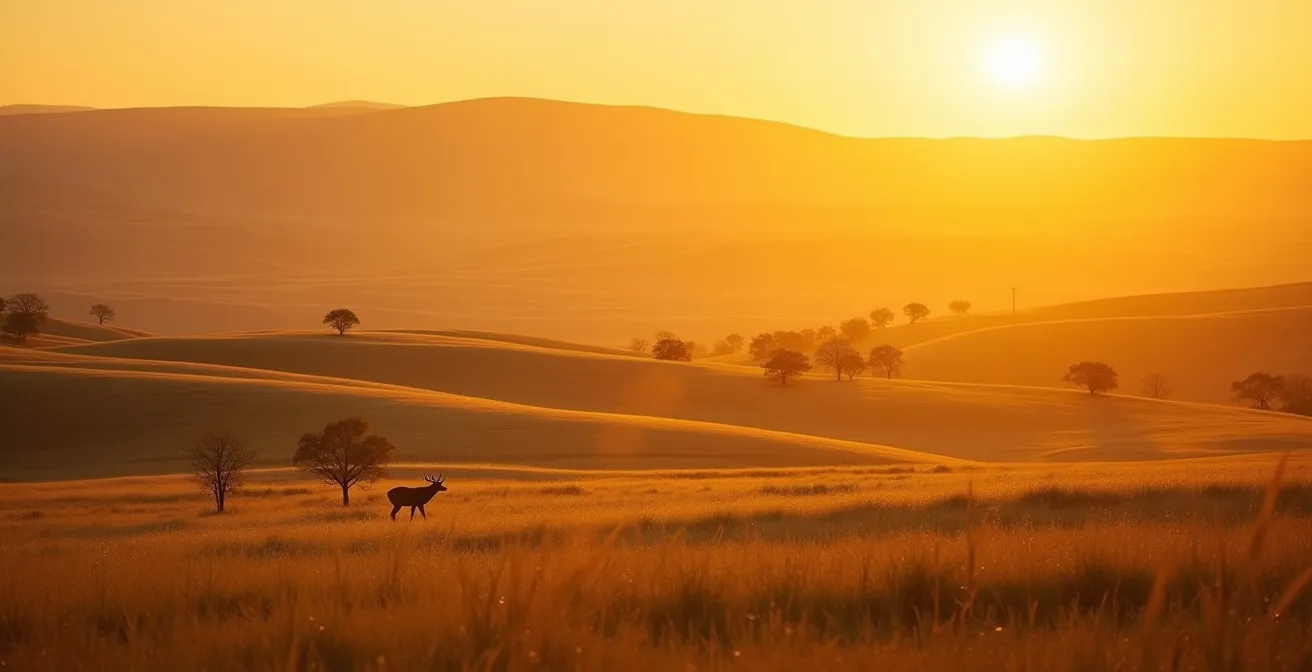
What truly sets Nebraska apart is its variety of huntable landscapes. It’s not one monolithic environment. Hunters can employ spot-and-stalk tactics in the rugged, timbered canyons of the western Pine Ridge, navigate the unique challenges of the vast, open Sandhills, or set up along the highly productive river bottoms that crisscross the state. This diversity means a hunter can tailor the experience to their preferred style, from tree stand hunting in an agricultural corridor to a Western-style hunt in open country. For the strategic hunter, Nebraska isn’t a “backup” state; it’s a foundational piece of a multi-year plan, providing a guaranteed opportunity to hunt big whitetails while waiting for lottery-style dream tags to come through elsewhere.
How to Spot Coues Deer in a Landscape That Looks Completely Flat?
Hunting Coues deer, the “gray ghosts” of the Southwest, is a masterclass in optics and patience. The challenge isn’t finding a unit with deer; it’s visually dissecting a landscape that can appear monotonous and empty to the untrained eye. Success hinges on abandoning traditional glassing techniques and adopting a methodical system designed to reveal animals that are masters of camouflage. The single biggest mistake hunters make is assuming the highest vantage point is the best.
Experienced Coues hunters know that these deer use micro-terrain to disappear completely. As one veteran hunter with over two decades of experience explains, the key is to see the landscape from a different angle.
After 20 years hunting Coues deer, the biggest mistake I see hunters make is glassing from the highest point. The ‘gray ghosts’ use micro-terrain brilliantly – they’ll bed in a 6-inch depression invisible from above. Set up on mid-level knobs where you can see into the folds and washes. Your success rate will double.
This counter-intuitive approach must be paired with a rigorous “grid-glassing” system. This isn’t a casual scan with binoculars; it’s a systematic process that requires high-power optics mounted on a tripod for absolute stability. By breaking the landscape into a grid and patiently dissecting each quadrant, you train your eyes to look for subtle signs: the flick of an ear, the horizontal line of a deer’s back, or the unnatural curve of an antler against a bush. This is especially effective during mid-day when the deer are bedded and static, relying on their camouflage. The following steps outline this proven system:
- Mount High-Power Optics: Use binoculars of 15x magnification or greater on a sturdy tripod. Stability is non-negotiable.
- Establish Your Grid: From a mid-level knob, mentally divide the opposing hillside into quadrants (left-to-right, top-to-bottom).
- Focus on Micro-Terrain: Systematically glass each quadrant for 10-15 minutes, paying special attention to small washes, shadow lines, and the shade beneath juniper or oak trees.
- Look for Parts, Not the Whole: Scan for fragments of a deer—an ear, an antler tip, a patch of gray—rather than a full body. This is crucial for spotting bedded animals.
- Glass All Day: Unlike other species, Coues deer can be effectively glassed during the harsh mid-day sun when they are bedded and less likely to be obscured by movement.
Mastering this skill is a significant investment in your “hunt portfolio.” It’s a technique-heavy pursuit where success is directly tied to your discipline behind the glass, not the price of your tag.
When to Check for Regulation Updates to Avoid Fines on Opening Day?
In the complex world of hunt planning, the single greatest point of failure—and the most avoidable—is running afoul of hunting regulations. A successful hunt can be instantly derailed by a hefty fine, a confiscated animal, or a canceled trip due to an overlooked rule change. As a Wildlife Enforcement Officer from the Western States Hunting Compliance Guide 2024 warns, these changes are often subtle and last-minute.
The silent killers of a hunt are the last-minute regulation changes: emergency fire bans, chronic wasting disease rules, and access road closures that can result in substantial fines.
Relying on the printed booklet you picked up months ago is a critical mistake. Regulations are dynamic, influenced by factors like drought, wildlife disease outbreaks, and fire danger. Managing this risk requires a proactive, timeline-based approach. You must create a system of checks and verifications that begins a month before your hunt and continues right up to the morning you head into the field. This isn’t just about compliance; it’s about protecting the significant investment of time and money you’ve poured into your hunt. The following checklist provides a framework for staying current and avoiding costly errors.
Your Pre-Hunt Regulation Compliance Checklist
- 30 Days Out (Initial Verification): Check the official state wildlife agency website for any amendments to season dates, bag limits, or unit boundaries. Confirm any emergency closures announced since the primary regulations were published.
- 14 Days Out (Land Access Check): Verify conditions with the relevant land management agency (e.g., Forest Service, BLM). Check their websites for updates on access road closures, trail washouts, or area restrictions due to logging or other activities.
- 7 Days Out (Wildlife Health & Transport Review): Specifically review rules related to Chronic Wasting Disease (CWD). Identify mandatory check station locations and understand the exact transport restrictions for carcass parts, which can vary significantly by state and even by unit.
- 48-24 Hours Out (Final Local Checks): Confirm local fire ban status with the county sheriff’s office website or non-emergency line. Double-check the state agency’s website and social media channels for any last-minute emergency closures due to fire or weather events.
- Morning of Hunt (Final Confirmation): Before leaving cell service, perform one last check of the state agency’s social media page or alerts system. Download offline maps and PDF copies of the most current regulations to your phone.
Key Takeaways
- Think of your hunts as a portfolio: balance high-risk DIY adventures with guaranteed-opportunity trips to ensure a fulfilling hunting career.
- International hunts, especially for African plains game, can offer surprising value and higher volume compared to some high-demand guided US hunts.
- Mastering logistics—from state-specific point systems and regulation checks to backcountry survival—is the absolute key to successful and repeatable DIY public land hunting.
How to Plan a Backcountry Hunt That Doesn’t End in Logistics Failure?
A backcountry hunt represents the pinnacle of DIY adventure, but it also carries the highest risk of logistical failure. When you are miles from the trailhead, a small oversight can escalate into a trip-ending catastrophe. Success is less about your hunting skill and more about your ability to anticipate and mitigate failure points with systematic redundancy. A detailed analysis of 150 failed backcountry hunts pinpointed the exact areas where hunters go wrong, with meat spoilage being the single largest failure point at 26%.
The other critical failure points identified were water purification issues (23%), navigation tool failure (19%), inadequate shelter (17%), and the inability to start a fire in wet conditions (15%). The common thread among these failures is a lack of backup systems. The hunter who relies on a single GPS unit, one water filter, or a single lighter is setting themselves up for disaster. A successful backcountry hunter operates with a “two is one, and one is none” mentality for all critical gear.
The solution is not to carry more gear, but to carry smarter, redundant systems. This means pairing a GPS with a map and compass (and knowing how to use them), carrying both a water filter and chemical purification tablets, and having at least three reliable fire-starting methods stored in separate, waterproof containers. For meat care, it means having high-quality game bags, a detailed plan for cooling the carcass, and knowing the fastest route to get it to a processor or cooler. The data is clear: this approach works. A study on hunt outcomes found that hunters who implement backup systems for critical gear report a 72% success rate in achieving their hunt objectives, a stark contrast to those who do not.
Building this level of resilience into your plan transforms a backcountry hunt from a gamble into a calculated expedition. It’s the final, and most important, piece of your hunting portfolio strategy—the execution that turns years of planning into a successful reality.
Now that you have the framework for building a strategic hunting portfolio, the next step is to apply it. Evaluate your personal resources of time and money, assess your current skill level, and define your goals for the next three to five years. Start planning your next move, whether it’s buying your first preference point or booking that long-dreamed-of trip.
Frequently Asked Questions on Public Land or Private Ranch: Which Destination Fits Your Skill Level?
What are the main regulatory differences between New Zealand and US stag hunting?
New Zealand offers year-round hunting on private estates with no bag limits or seasons, while US hunting is strictly regulated by state with specific seasons, tag requirements, and draw systems.
Do I need CITES permits for New Zealand trophies?
Red stags from New Zealand typically don’t require CITES permits as they’re not native species, unlike some US species which may require additional documentation.
Which destination offers better value for international hunters?
New Zealand provides guaranteed opportunities without point systems or draws, while US hunts require years of point building but offer the authentic North American hunting experience.