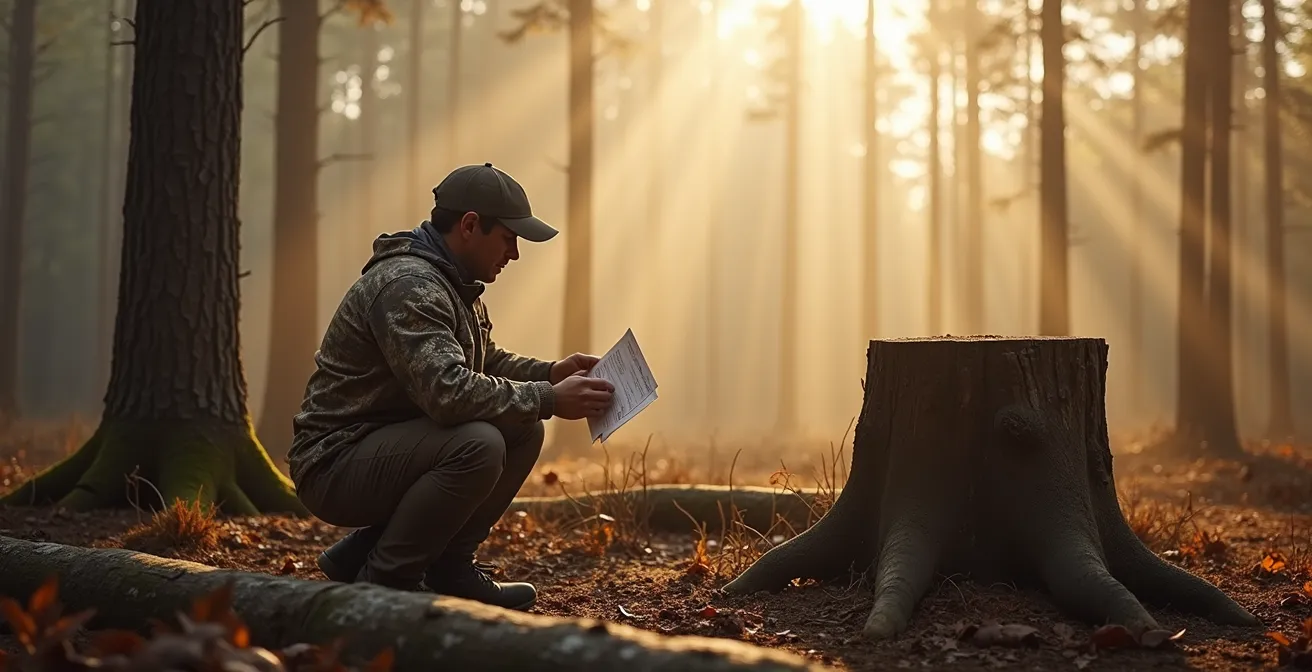
The bag limit on your tag is not an arbitrary restriction; it’s a precise prescription derived from complex ecological data to ensure the herd’s long-term survival and your future hunting opportunities.
- Wildlife agencies use your harvest data to build sophisticated population models that dictate sustainable quotas.
- Harvest timing and doe-to-buck ratios are scientifically determined to protect breeding cycles and prevent population crashes.
Recommendation: Shift your mindset from simply following rules to actively participating in conservation by understanding the science behind the regulations and contributing accurate harvest data.
For any responsible hunter, seeing a bag limit can sometimes feel restrictive, especially in a promising area. The immediate thought is often about compliance—following the law to avoid a hefty fine and a conversation you’d rather not have. This perspective, while pragmatic, misses the entire point. The numbers on your tag aren’t a bureaucratic hurdle; they are the frontline of a complex and continuous scientific effort to manage a dynamic natural resource. Many discussions around hunting regulations focus on the legalities, the gear requirements, or the boundaries of a hunting unit.
But this conversation often ignores the fundamental biology and mathematics that underpin those very rules. The common advice is to “follow the law,” but it rarely explains the deep ecological consequences of failing to do so. What if the real key to being an ethical and successful hunter isn’t just about knowing the rules, but understanding the science that writes them? The truth is, bag limits are a direct output of population dynamics, breeding science, and vast amounts of data—much of which is provided by hunters themselves.
This guide moves beyond the surface-level “what” of regulations to explore the critical “why.” We will dissect the biological necessity of hunting seasons, the mathematical impact of your personal harvest, and the data-driven strategies that wildlife agencies use to keep herds healthy. By understanding the science, you transform from a passive rule-follower into an informed and essential partner in wildlife conservation, ensuring that the thrill of the hunt exists for generations to come.
To fully grasp the intricate balance required for sustainable wildlife management, this article will break down the core components that influence hunting regulations. We will explore everything from the biological timing of seasons to the critical role your own data plays in shaping future policy.
Summary: The Ecological Science Behind Sustainable Hunting Quotas
- Why Hunting Seasons Are Timed Around Breeding Cycles?
- How to Calculate Your Personal Harvest Impact on Local Herds?
- Legal vs. Illegal Take: Where the Line Blurs for Uninformed Hunters?
- The Population Crash Caused by Harvesting the Wrong Doe Ratio
- When to Check for Regulation Updates to Avoid Fines on Opening Day?
- Why Wildlife Agencies Rely on Hunter Data to Monitor Herd Health?
- How to Apply for Controlled Hunt Draws in High-Demand Zones?
- Why Controlled Hunting Is Necessary in Suburban and Protected Areas?
Why Hunting Seasons Are Timed Around Breeding Cycles?
The dates for hunting season are not chosen at random. They are meticulously planned to minimize disruption to the most critical phase of a deer herd’s life cycle: reproduction. The primary goal is to schedule harvest periods outside of peak breeding and fawning times. Hunting during the rut can excessively stress animals, but the most significant factor is protecting does while they are pregnant or nursing young fawns. A fawn’s survival is incredibly low without its mother in the first few months, so a post-fawning season ensures the next generation has a fighting chance.
This timing is a direct response to biological triggers in the deer population. The rut, or breeding season, is not a haphazard event. Research shows that its timing is precisely synchronized by photoperiod—the length of daylight. For white-tailed deer, this results in a very condensed window for procreation. An analysis of deer ecology shows that most breeding takes place within a 21-day period centered on the peak breeding date. By scheduling hunting seasons around this critical biological clock, managers ensure that the majority of does are successfully bred, which is fundamental for the herd’s continuity.
To fully appreciate this vulnerability, consider the fawn itself. Its survival is the ultimate measure of a successful breeding season and healthy herd management.
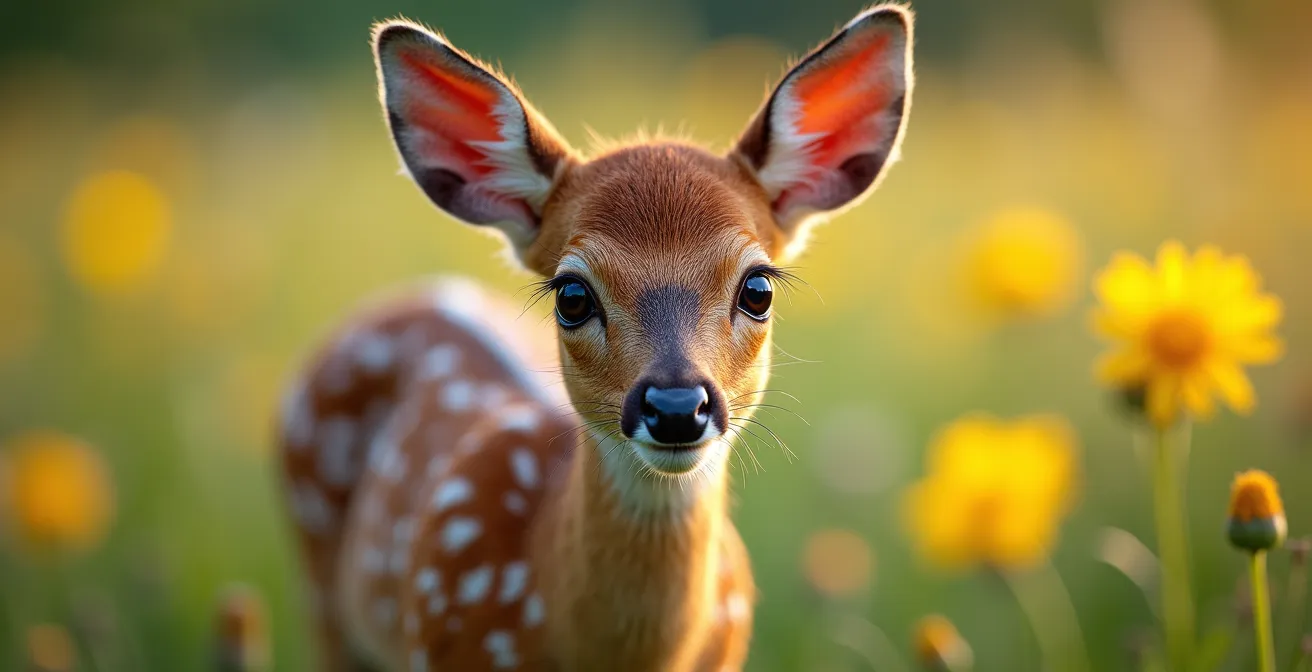
As the image illustrates, a newborn fawn is completely dependent and camouflaged for protection. Harvesting its mother during this fragile period is a guaranteed death sentence for the fawn, representing a loss of not one, but two or even three animals from the future population. Therefore, season dates are a non-negotiable tool for protecting reproductive success and ensuring there is a population to hunt the following year. It is a clear example of managers using biological science to create sustainable policy.
Ultimately, respecting these timelines is a hunter’s first duty in preserving the herd. It acknowledges that the hunt is a privilege granted only when it does not compromise the herd’s ability to perpetuate itself.
How to Calculate Your Personal Harvest Impact on Local Herds?
It’s easy for an individual hunter to feel that their single tag has a negligible effect on a vast deer population. While one harvest alone won’t decimate a herd, the cumulative impact of all hunters is the primary tool managers use to regulate population density. Understanding your specific role in this equation transforms your hunt from a personal pursuit into a conscious act of management. Surprisingly, most hunters have a much smaller impact than the regulations allow. For example, a study of hunter patterns found that less than 1% of Mississippi deer hunters utilize their full bag limit, with the average hunter taking just 1.6 deer per year.
This data shows that bag limits are not set with the average hunter in mind; they are designed as a hard ceiling to prevent overharvest, even if only a small percentage of hunters reach it. The goal is to keep the total harvest within a scientifically prescribed range. As the Montana State University Extension service explains, a core tenet of wildlife management is to keep a population low enough through hunting so that it does not exceed the habitat’s carrying capacity and cause a catastrophic crash from starvation or disease.
To conceptualize your personal harvest’s role, you must think like a wildlife manager, but on a micro-scale. It involves understanding your local deer density and the management goals for your specific area. This simple exercise can connect your actions directly to the health of the herd you hunt.
Your Action Plan: Assess Your Personal Harvest Impact
- Determine Area Size: Calculate the size of your primary hunting area in square miles.
- Research Local Density: Find your local wildlife agency’s deer density estimates (deer per square mile) for your specific management unit.
- Estimate Local Population: Multiply the density by your area’s size to get a rough estimate of the deer population you are directly impacting.
- Compare Harvest to Population: Evaluate your typical annual harvest (e.g., one doe, one buck) as a percentage of that estimated local population.
- Align with Agency Goals: Check your agency’s management plan. Are they trying to increase, decrease, or stabilize the population in your unit? Ensure your harvest decisions align with that goal.
This exercise makes it clear that your harvest is a vital data point and a management action. It is your direct contribution to maintaining the delicate balance between the deer population and its environment.
Legal vs. Illegal Take: Where the Line Blurs for Uninformed Hunters?
The line between a legal harvest and an illegal one seems stark: follow the regulations, and you are on the right side of the law. However, for an uninformed hunter, this line can blur through ignorance of specific rules like tagging requirements, bag limits, and property boundaries. “I didn’t know” is not a valid defense, and the consequences of such “accidents” can be severe, both for the hunter and the wildlife population. Violations are not always minor; game wardens report cases where individuals have taken up to 10 antlered deer, exceeding limits by double or even triple in a single season.
These actions are not just illegal; they are a direct sabotage of the scientific management that underpins sustainable hunting. When a poacher or an uninformed hunter takes an animal outside the legal framework, they do more than just break a rule. They steal a resource from the public, undermine the data collection vital for herd management (as we will see later), and disrespect the ethical foundation of hunting. Common areas where the line blurs include “party hunting” (where one hunter fills a tag for another), misidentifying the sex or age of an animal, or failing to properly tag a harvest before moving it.
The regulations are designed to be a clear, bright line. Bag limits, for instance, are the result of careful calculation. They are not arbitrary suggestions. Possession limits, which dictate how many animals you can have in your possession (including at home in the freezer), are another area of confusion. An ethical hunter must understand that these laws are in place to manage game numbers for long-term sustainability while providing a food resource. Ignoring them, whether intentionally or not, directly threatens that balance.
Ultimately, the responsibility rests on each individual to know and follow every detail of the law. This diligence is what separates a true conservationist from someone who merely carries a rifle. It is the ethical bedrock upon which the entire privilege of hunting is built.
The Population Crash Caused by Harvesting the Wrong Doe Ratio
While harvesting a trophy buck is often the focus of hunting culture, the single most impactful decision a hunter makes for herd management is whether or not to harvest a doe. Wildlife managers understand a simple, powerful truth: you control a deer population by managing its reproductive engine—the does. Harvesting too few does in an overpopulated area leads to habitat destruction and starvation. Conversely, harvesting too many, or the wrong ones, can trigger a population crash.
The reproductive potential of does is immense. In a healthy habitat where the population is in balance with the food supply, most adult does will give birth to twins. Furthermore, studies have shown that in ideal conditions, as many as 15% of does can even produce triplets. Removing just one mature doe from the herd eliminates not only her but also her future lifetime of offspring. This is why doe tags are such a precise and powerful management tool. Issuing more doe tags is the fastest way to reduce a population, while restricting them is the quickest way to encourage growth.
The buck-to-doe ratio is another critical metric influenced by harvest decisions. An imbalanced ratio, with far too many does per buck, can lead to a prolonged, drawn-out rut. This exhausts bucks, who must travel more and compete longer to breed, leaving them in poor condition for the winter. It also means some does may be bred late or not at all, resulting in late-born fawns with lower survival rates. A balanced ratio ensures a synchronized, efficient rut and healthier animals. The table below, based on principles from deer research, illustrates this critical relationship.
| Buck:Doe Ratio | Breeding Impact | Population Effect |
|---|---|---|
| 1:3-4 (Optimal) | Synchronized rut, healthy bucks | High fawn survival |
| 1:10+ (Skewed) | Prolonged rut, exhausted bucks | Late/missed breeding, lower fawn survival |
As this data from a comparative analysis of deer breeding phases shows, maintaining an optimal ratio is not just an abstract goal; it has direct, measurable effects on fawn survival and overall herd health.
Therefore, when you receive a doe tag, it is not an optional “bonus” deer. It is a specific prescription from wildlife managers asking you to perform a critical management function. Filling that tag is often more important for the herd’s health than harvesting any buck.
When to Check for Regulation Updates to Avoid Fines on Opening Day?
Hunting regulations are not static. They are adaptive management tools that change in response to population data, environmental conditions, and emergent threats like disease. Assuming last year’s rules still apply is one of the easiest ways for a well-intentioned hunter to accidentally break the law. Agencies may change bag limits, season dates, or even close entire units with little fanfare. This dynamic nature is a feature, not a bug; it shows that managers are actively using science to adjust to real-world conditions.
For example, following a harsh winter that causes high deer mortality, an agency will likely reduce the number of available tags the following year to allow the herd to recover. Conversely, after several mild winters and high fawn survival, they may increase bag limits to prevent overpopulation. A preliminary report from Minnesota, for instance, noted that while there was a 9% increase in deer harvest in one region in 2024, wildlife managers are maintaining conservative bag limits because it will take more than one mild winter for the population to fully recover from previous hard seasons. This is a perfect example of data-driven, cautious management in action.
The responsibility to stay informed falls squarely on the hunter. The best practice is to make checking for updates a part of your pre-season ritual, just like sighting in your rifle. Check for updates at these key times:
- When the new season’s regulations are first published (typically late spring or summer).
- One month before your planned opening day.
- The week before your hunt.
- The day before you head out, for any last-minute emergency changes.
Proactive hunters should subscribe to their state wildlife agency’s email newsletter, download their official app if available, and set web alerts. This isn’t about paranoia; it’s about professionalism and ensuring your hunt is both legal and ethical.
Treat the official regulations booklet or website as the definitive source of truth. A conversation with a friend or a post on a forum is not a substitute for the official, legally binding rules published by the managing agency.
Why Wildlife Agencies Rely on Hunter Data to Monitor Herd Health?
Every time a hunter reports a harvest, they are doing more than just complying with a rule; they are contributing a vital data point to a massive, ongoing scientific study. Wildlife agencies do not have the resources to conduct a full census of deer populations across vast landscapes. Instead, they rely on a suite of data, and the most critical component is harvest data provided by hunters. This information—including the animal’s sex, age, and location of harvest—is the bedrock of modern wildlife management.
This data feeds into sophisticated computer models that estimate population size, density, sex ratios, and survival rates. Without this information from hunters, managers would essentially be flying blind, making guesses about how many tags to issue. The hunter’s report provides the “ground truth” that calibrates these models and makes them accurate. As the Houston Safari Club Foundation puts it, the relationship is direct and essential.
Every time a hunter legally harvests an animal, they contribute to scientific research and wildlife management.
– Houston Safari Club Foundation, How Hunting Supports Wildlife Management
The application of this data is highly advanced. Agencies are moving beyond simple spreadsheets to complex, predictive models that can forecast population trends and test the potential effects of different regulation changes. This allows for more precise and effective management decisions.
Case Study: Tennessee’s Bayesian Population Model
To manage its white-tailed deer population, the state of Tennessee developed a sophisticated statistical tool known as a Bayesian integrated population model (IPM). As detailed in a study published by the National Institutes of Health, this model is remarkable because it relies almost exclusively on hunter harvest data collected between 2005 and 2023. By analyzing this long-term dataset, the IPM can generate reliable estimates of deer abundance for the entire state and for each individual Deer Management Unit (DMU), proving that hunter-supplied information is sufficient for high-level scientific monitoring.
Therefore, mandatory harvest reporting is not a bureaucratic chore. It is arguably the most important conservation act a hunter performs all year. An un-reported harvest is a lost data point, a small tear in the fabric of scientific knowledge that keeps the entire system working.
How to Apply for Controlled Hunt Draws in High-Demand Zones?
In areas where hunter demand far exceeds the sustainable number of animals that can be harvested, wildlife agencies use controlled hunt draws. These lotteries are the fairest way to allocate a limited number of tags in high-quality or sensitive habitats. While there’s always an element of luck, strategic application can significantly increase your odds over time. Success in these systems requires research, patience, and a long-term perspective. It is a game of probability, not just chance.
The first step for any hunter is to dive into the data. Most agencies publish detailed draw statistics from previous years. This information is a gold mine. It shows you how many people applied for each hunt, how many preference or bonus points were needed for a successful draw, and which units are becoming easier or harder to draw. By analyzing these trends, you can identify “opportunity units”—hunts that offer a good experience but may be overlooked by the masses chasing famous, low-odds units.
Beyond just picking a unit, there are several strategies to maximize your chances. Applying as a group can be advantageous in states that average preference points, but disadvantageous in others. Some states have “point-only” options where you can build your points for a future dream hunt without actually entering the draw for a tag that year. It’s also wise to monitor agency websites for returned tags; these are often re-issued on a first-come, first-served basis and can be a fantastic way to get a great tag with zero points.
Ultimately, a successful draw application is the result of diligent homework. By treating the application process with the same seriousness as the hunt itself, you honor the system designed to protect both the wildlife and the quality of the hunting experience.
Key Takeaways
- Bag limits are not arbitrary; they are scientific prescriptions based on population models fed by hunter data.
- Harvesting does is the most powerful tool for population control; doe tags are a critical management request, not a “bonus.”
- Hunting seasons are timed around biological events like the rut and fawning to protect the herd’s reproductive engine.
Why Controlled Hunting Is Necessary in Suburban and Protected Areas?
The idea of hunting in a suburban park or a protected nature area can seem counterintuitive. However, in many parts of the country, it has become an essential wildlife management tool. These “unhunted” pockets often become overpopulated with deer, leading to a cascade of negative consequences for the ecosystem, for other species, and for humans. Without natural predators to keep them in check, deer populations in these refuges can explode, leading to severe over-browsing that decimates native vegetation and harms the habitats of songbirds and other wildlife.
Beyond habitat destruction, overpopulation creates a serious public health risk, both for humans and the deer themselves. High-density deer populations are a major factor in the spread of tick-borne illnesses like Lyme disease. More critically, they create the perfect breeding ground for devastating wildlife diseases. An authoritative report from the Houston Safari Club Foundation highlights that Chronic Wasting Disease (CWD) affects deer, elk, and moose, is incurable and always fatal, and spreads more rapidly in overcrowded environments. Reducing deer density through controlled hunting is one of the only effective methods for slowing the spread of CWD.
Controlled hunts in these sensitive areas are highly structured and safe. They are often restricted to specific methods (like archery), limited to certain days, and require hunters to pass special qualification tests. These are not typical hunts; they are targeted surgical removals of surplus animals conducted by skilled private citizens under the strict supervision of wildlife managers. They are a cost-effective and efficient solution to a problem that, if left unchecked, would require far more expensive and invasive government intervention.
Your next step is to go beyond just reading the regulations and start exploring the harvest reports and management plans on your state wildlife agency’s website. Become an informed partner in conservation and an advocate for the scientific principles that guarantee the future of the hunt.