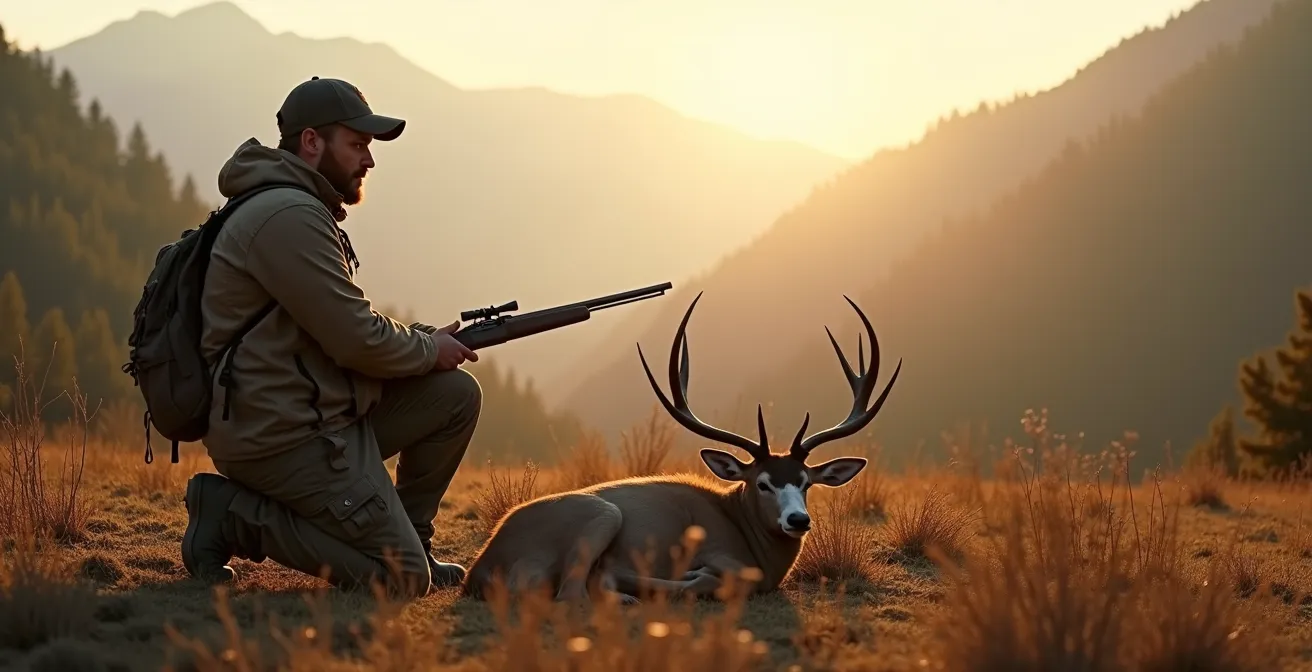
Achieving a carbon-neutral hunt is less about giving things up and more about making strategic, informed choices in your gear, travel, and on-the-ground practices.
- Copper ammunition eliminates a primary source of ecosystem toxicity.
- Gear longevity and recycled materials drastically cut the embodied carbon of your kit.
- Efficient travel and base camp planning minimizes your physical and chemical footprint.
Recommendation: Start by auditing one area of your next trip—ammunition, transport, or waste—to begin the shift toward active environmental stewardship.
For the environmentally aware hunter, there’s a growing internal conflict: the profound love for pristine wilderness versus the undeniable environmental cost of getting there and operating within it. We worry about the fuel consumption of our trucks, the materials in our gear, and the subtle traces we leave behind. The standard advice, “pack it in, pack it out,” is a crucial starting point, but it only scratches the surface of our true ecological footprint.
This approach addresses visible waste but often ignores the hidden, systemic impacts—the embodied carbon in a new jacket, the chemical leeching from a lost lead fragment, or the long-term soil compaction from a poorly placed camp. The conversation needs to evolve from simply ‘leaving no trace’ to actively managing our impact through what can be called ecological footprint accounting. This means understanding and taking responsibility for the entire lifecycle of our hunting activities.
But what if the solution wasn’t about sacrifice, but about strategic upgrades and smarter planning? This guide moves beyond the basics to provide a blueprint for the modern hunter-steward. We will explore how specific, data-driven choices in ammunition, gear, camp setup, and even transportation can transform your hunt from a consumptive activity into a net-positive force for the environment. By embracing this mindset, you can align your passion for the outdoors with a deep commitment to its preservation and restoration.
This article details the practical strategies and the science behind them, giving you a clear roadmap. The following sections break down the key areas where you can make the most significant positive changes to your environmental impact.
Summary: Your Blueprint for a Low-Impact Hunt
- Why Switching to Copper Ammo Is the Single Biggest Eco-Move You Can Make?
- How to Identify Hunting Gear Made from Recycled or Ethical Materials?
- Tent vs. Trailer: Which Base Camp Setup Minimizes Soil Compaction?
- The Trash Habit That Contaminates Pristine Backcountry Water Sources
- How to Plan Carpooling for Expeditions to Reduce Fuel Consumption?
- Why Copper Bullets Require More Velocity to Expand Reliably?
- Cathole or Pack-Out: What Is Required in Alpine Zones?
- How Invasive Species Removal by Hunters Restores Native Biomes?
Why Switching to Copper Ammo Is the Single Biggest Eco-Move You Can Make?
The single most impactful change a hunter can make to their ecological footprint is switching from lead to copper ammunition. This isn’t just about environmental preference; it’s about eliminating a potent neurotoxin from the food web. When a lead bullet fragments upon impact, it can scatter hundreds of tiny particles throughout the animal. These fragments not only contaminate the meat intended for consumption but also pose a lethal threat to scavengers like eagles, condors, and bears that feed on gut piles or unrecovered game. The impact is staggering and widespread.
This issue is not theoretical. It has been proven that ecosystems suffer from lead poisoning originating from hunting activities. Conversely, the positive effects of banning lead are just as demonstrable. The move to non-toxic alternatives is a cornerstone of modern, responsible wildlife management and a clear demonstration of lifecycle stewardship.
Case Study: Denmark’s Pioneering Lead Ammunition Ban
Denmark provides a powerful real-world example. As the first country to implement a complete ban on all lead ammunition for hunting, their two-decade journey shows a remarkable decline in game meat lead content. A comprehensive study revealed that while lead concentrations have dropped to very low levels in Denmark, they have simultaneously increased in other European nations with partial or no restrictions. In fact, analysis shows that in those regions, the amount of lead in game meat being fourteen times higher than levels used in EU risk assessments. This proves that a decisive switch to non-toxic ammo directly and effectively removes a major pollutant from the ecosystem and the food chain.
Switching to copper is more than a gear choice; it’s a fundamental decision to stop introducing a persistent toxin into the wild places you value. While there are ballistic differences to consider, the ecological benefit is undeniable and positions the hunter as a protector, not a contaminator, of the environment.
How to Identify Hunting Gear Made from Recycled or Ethical Materials?
The gear we carry into the field has an environmental story that begins long before it’s packed in a truck. The manufacturing of technical apparel, packs, and equipment contributes significantly to an expedition’s total carbon footprint, a concept known as embodied carbon. Choosing gear made from recycled materials or produced under strict ethical and environmental standards is a powerful way to reduce this hidden impact. However, navigating the world of “eco-friendly” marketing requires a discerning eye for legitimate certifications.
Instead of relying on vague brand claims, look for independent, third-party certifications on product tags and descriptions. Standards like the Global Recycled Standard (GRS) ensure a product contains a verified percentage of recycled content, while certifications like Bluesign® and Oeko-Tex® guarantee that harmful chemicals have been eliminated from the manufacturing process and the final product. For insulated gear, the Responsible Down Standard (RDS) verifies humane treatment of animals.
The most sustainable gear, however, is often the gear you already own. Durability is a key tenet of sustainability. Investing in high-quality, repairable items and maintaining them properly is a direct action against the “fast fashion” mentality that has crept into the outdoor industry. Indeed, sustainability research demonstrates that extending a garment’s life by just one year can reduce its carbon footprint by over 20%. This prioritizes performance and longevity over novelty.
The following table breaks down the most common certifications to help you make informed decisions when purchasing new equipment. By supporting brands that commit to these standards, you use your purchasing power to drive the industry toward greater accountability.
| Certification | What It Verifies | Environmental Impact | Look For |
|---|---|---|---|
| Bluesign® | Chemical safety in textiles | Eliminates harmful chemicals from production | Blue label on technical apparel |
| Oeko-Tex® 100 | Textile safety testing | No harmful substances in final product | Confidence in Textiles label |
| Responsible Down Standard (RDS) | Ethical down sourcing | Ensures animal welfare in down production | RDS certification tag |
| Global Recycled Standard | Recycled content verification | Minimum 50% recycled materials | GRS logo on products |
| PFC/PFAS-Free | No forever chemicals | Prevents persistent environmental toxins | PFC-Free designation |
Tent vs. Trailer: Which Base Camp Setup Minimizes Soil Compaction?
Your base camp is your home in the wild, but its very presence leaves a mark. One of the most significant, yet often overlooked, impacts is soil compaction. The weight of vehicles, trailers, and even repeated foot traffic in a concentrated area can crush soil structure, destroying microbial life, preventing water infiltration, and inhibiting plant regrowth for years. The choice of shelter is therefore a critical component of your low-impact strategy.
A minimalist “spike camp” or an ultralight tent setup, especially when pitched on durable surfaces like rock, pine duff, or sand, has a negligible effect. The pressure exerted on the ground is minimal and dispersed. In contrast, a large canvas wall tent requires a significant cleared area and, while comfortable, creates a much larger zone of disturbance. The most impactful option is the travel trailer or RV. Its sheer weight, combined with the vehicle needed to tow it, causes severe compaction that can render a patch of land barren for over five years. The embodied carbon of a trailer is also orders of magnitude higher than a tent.

As the image above illustrates, a minimalist approach not only reduces your load but also fundamentally shrinks your physical footprint on the landscape. The goal is to live with the land, not on it. This requires a conscious effort to select campsites that are naturally resilient and to choose a shelter system that matches the principle of systemic efficiency—achieving comfort and function with the least possible impact.
The following data provides a clear comparison of the environmental costs associated with common base camp styles, factoring in not just compaction but the full lifecycle impact.
As this comparative analysis from environmental researchers shows, the difference in long-term site damage between a lightweight setup and a trailer-based camp is stark.
| Setup Type | Soil Compaction | Embodied Carbon | Site Disturbance | Recovery Time |
|---|---|---|---|---|
| Ultralight Tent | Minimal (< 5 psi) | 30-50 kg CO2e | 6-10 sq meters | 1-2 seasons |
| Canvas Wall Tent | Moderate (10-15 psi) | 100-150 kg CO2e | 20-30 sq meters | 2-3 seasons |
| Travel Trailer | Severe (20-30 psi) | 2000-3000 kg CO2e | 40-60 sq meters | 5+ years |
| Spike/Bivy Camp | Negligible (< 2 psi) | 10-20 kg CO2e | 2-4 sq meters | < 1 season |
The Trash Habit That Contaminates Pristine Backcountry Water Sources
The mantra “pack it in, pack it out” is well-known, but its common interpretation is dangerously incomplete. Most hunters are diligent about packing out large items like food wrappers and bottles. The truly insidious problem is micro-trash: the tiny, often-unnoticed bits of waste that escape our attention. These include the corner tear-offs from energy bar wrappers, spent primers, shotgun wads, and minuscule food particles from washing dishes. While seemingly insignificant, these items accumulate and introduce plastics, chemicals, and unnatural scents into the environment.
Perhaps the most damaging form of unseen contamination comes from improper greywater disposal. Washing dishes and pouring the water directly onto the ground near a creek or lake introduces soap, oils, and food scraps that disrupt aquatic ecosystems. These pollutants can fuel algal blooms and harm sensitive species. Similarly, failing to pack out every single piece of ammunition-related waste contributes to long-term contamination. While the switch to copper ammo eliminates the primary toxin, plastic shotgun wads persist for decades, and spent brass casings are still a foreign object. For perspective on unseen pollutants, environmental studies estimate that over 3,000 metric tons of lead are released annually into the U.S. environment from hunting alone, demonstrating the scale of invisible contamination.
A true low-impact ethic requires a fanatical level of attention to detail. It means treating every campsite, glassing knob, and lunch spot as a sterile environment that must be left exactly as it was found. This requires adopting a systematic protocol to prevent even the smallest piece of trash from being left behind.
Action Plan: Micro-Trash Prevention Protocol
- Pre-trip preparation: Remove all unnecessary commercial packaging from food and transfer items to reusable silicone bags or containers.
- Designate a micro-trash bag: Use a dedicated, sealable small bag specifically for tiny items like wrapper corners, plastic seals, and spent primers.
- Implement the ‘circle check’: Before leaving any spot where you’ve stopped for more than a few minutes, walk a 10-foot circle and scan the ground for any dropped items.
- Collect all brass casings: Use a brass catcher on your rifle or immediately mark your location with GPS after a shot to ensure you can recover the casing later.
- Pack out shotgun wads: In wetland environments, make a concerted effort to find and pack out all plastic wads, which do not biodegrade.
- Manage greywater: Strain all dishwater through a bandana or fine mesh to capture food particles, which you must pack out. Scatter the strained water at least 200 feet from any water source.
How to Plan Carpooling for Expeditions to Reduce Fuel Consumption?
For many hunting expeditions, the single largest source of carbon emissions is not the activity itself, but the transportation required to get to the trailhead. Multiple vehicles driving long distances to a single location represent a massive, and often unnecessary, consumption of fossil fuels. Strategic carpooling is one of the most direct and effective ways to slash the carbon footprint of your group’s trip. This goes beyond simply sharing a ride; it involves coordinated logistical planning for systemic efficiency.
Effective planning starts with a centralized meeting point that is logical for all members of the party. From there, consolidate gear into the most fuel-efficient vehicle capable of handling the terrain and payload. This often requires ruthless gear-list auditing among the group to eliminate redundant items. Do you really need three camp stoves and four axes for a party of three? A shared, pre-planned gear list prevents this kind of wasteful duplication. Digital mapping tools can be used to plan the most efficient routes and even calculate the total fuel cost and carbon output, making the savings tangible.
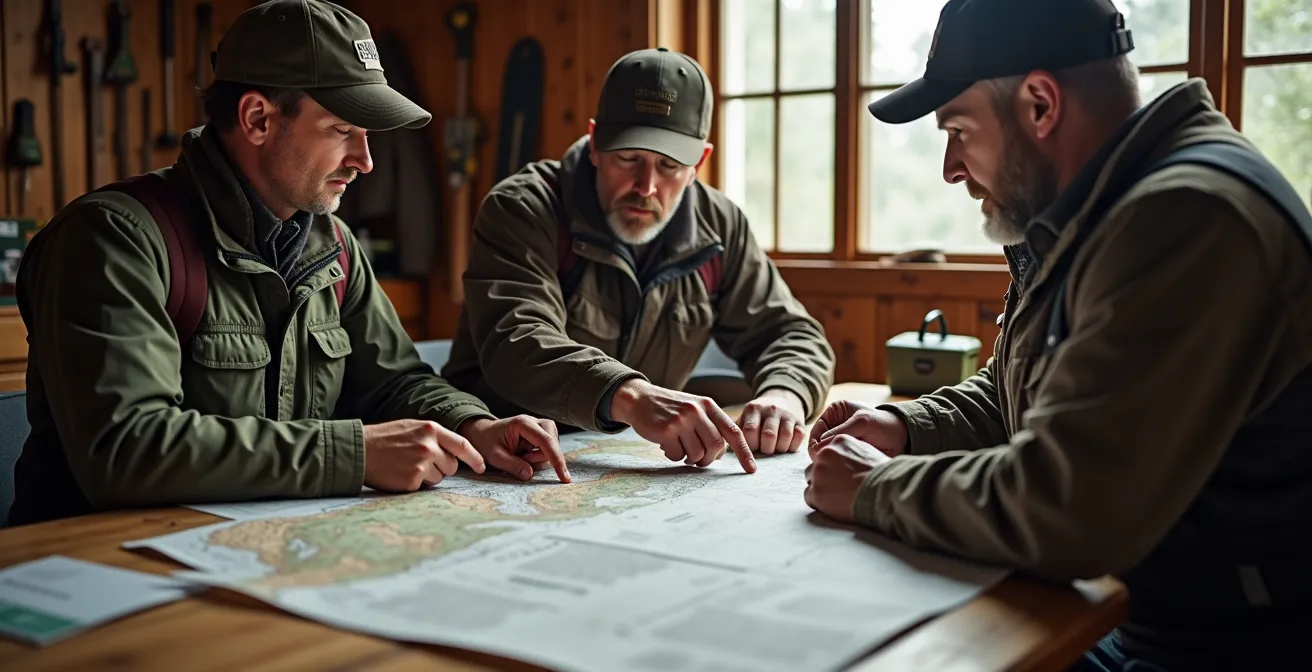
This collaborative approach not only cuts emissions and fuel costs but also strengthens team cohesion before you even hit the dirt. As highlighted in a study on the environmental cost of venison, the primary issue was often the carbon emissions from hunter travel. A case in point involves Scottish venison, where nearly a third is exported, and the associated “food miles” dramatically increase its carbon footprint. The study concluded that managing hunts to reduce travel distance was a key mitigation strategy. The same logic applies to personal expeditions: reducing vehicle miles is paramount.
The goal is to shift the mindset from individual convenience to collective efficiency. This means communicating openly about gear, travel plans, and payload capacity to minimize the number of engines making the long drive into the backcountry. It’s a simple change in logistics that yields a significant environmental dividend.
Why Copper Bullets Require More Velocity to Expand Reliably?
The transition to copper bullets is an ecological imperative, but it requires hunters to understand the different terminal ballistics of this material. The central concept is one of material science: copper is less dense and significantly harder than lead. This has direct implications for how a bullet performs upon impact. Because it’s a tougher material, a monolithic copper bullet requires more force—and therefore higher impact velocity—to initiate expansion or “mushrooming.” This expansion is critical for creating a wide wound channel and delivering hydrostatic shock, ensuring a quick and humane kill.
Lead bullets, being soft, expand readily even at lower velocities. However, this expansion comes at the cost of fragmentation and weight loss. In contrast, copper’s integrity is its greatest strength from an environmental and penetration standpoint. Ballistics research shows that while lead-core bullets can lose up to 40% of their mass upon impact, modern copper bullets retain 95-100% of their mass. This incredible weight retention translates to deeper, more predictable penetration, which is a major advantage on larger or tough-skinned game.
However, this superior integrity means hunters must be more deliberate in their cartridge and shot selection. A copper bullet that fails to reach its minimum impact velocity threshold may not expand at all, behaving more like a full metal jacket (FMJ) projectile. This can “pencil through” an animal, creating a narrow wound channel that is less likely to be immediately fatal, increasing the risk of a lost or wounded animal. As a technical analysis from Hatch Magazine explains:
Copper bullets work fine, though have less mass than bullets of lead and copper combined which subsequently deliver less energy to the animal. This reduced energy can sometimes lead to animal injury rather than a humane kill.
– Technical analysis, Hatch Magazine analysis of copper ammunition performance
Therefore, a responsible switch to copper involves studying the manufacturer’s data for your chosen bullet to know its minimum expansion velocity and ensuring your chosen cartridge can deliver that performance at your expected hunting ranges. It’s a more technical approach to what I call ballistic ecology—mastering your tools to be both environmentally clean and ethically lethal.
Cathole or Pack-Out: What Is Required in Alpine Zones?
Proper human waste disposal is a critical Leave No Trace principle, but the correct method is highly dependent on the environment. In lower-elevation forests with rich, organic soil, digging a 6-8 inch deep “cathole” at least 200 feet from water is the accepted standard. The active microbial community in the soil breaks down the waste relatively quickly. However, this method is completely inappropriate and environmentally damaging in fragile alpine zones.
Alpine environments, typically found above the treeline, are characterized by thin, rocky soil, low temperatures, and a very short growing season. The microbial activity necessary for decomposition is minimal or non-existent. In these conditions, waste does not break down. Instead, it freezes, gets exposed by erosion, and can contaminate pristine watersheds for an incredibly long time. Indeed, alpine ecology research indicates that human waste in these zones can take decades or even centuries to decompose. This makes packing out all solid human waste not just a suggestion, but an absolute requirement.
This mandate requires carrying a commercial or homemade pack-out system, often called a WAG bag or “rest stop” bag. These kits contain a puncture-proof bag with a gelling agent or powder that deodorizes waste and renders it inert for safe transport. The rules for alpine waste management are strict for a reason:
- Check Elevation: Above the treeline, a pack-out system is almost always mandatory.
- Assess Soil and Temperature: If soil is less than 6 inches deep or the area experiences freezing temperatures for much of the year, decomposition is negligible. Pack it out.
- Urine Protocol: While solid waste must be packed out, urine should be disposed of on rock surfaces or mineral soil, away from delicate alpine vegetation and water sources, to prevent animals from digging up plants to get at the salts.
Respecting these fragile, high-elevation ecosystems means adopting the most stringent waste disposal methods. It is a clear-cut case where convenience must be sacrificed for the long-term health of the environment. The “pack it out” rule here is absolute and applies to everything.
Key Takeaways
- The switch to non-toxic copper ammunition is the single most effective action to prevent poisoning the food web.
- Your gear’s environmental impact (embodied carbon) can be drastically reduced by choosing durable, repairable items and those with verified recycled content certifications.
- Low-impact is a system: your choice of base camp, from a minimalist tent to a trailer, has long-term consequences for soil health and site recovery.
How Invasive Species Removal by Hunters Restores Native Biomes?
The ultimate goal of an environmental steward is to move beyond simply reducing negative impacts and begin actively contributing to ecosystem health. Hunting, when directed by sound science, is a uniquely powerful tool for achieving this through the management and removal of invasive species. This is the pinnacle of the hunter-conservationist ethic: participating directly in biome restoration. Invasive animals like feral hogs, nutria, or certain exotic deer species can devastate native habitats by overgrazing, destroying wetlands, and outcompeting native wildlife for resources.
State and federal wildlife agencies often rely on hunters as the primary force for controlling these destructive populations. By focusing hunting efforts on these species, hunters provide a crucial, free-of-charge ecological service that would otherwise cost taxpayers millions in professional culling operations. Every invasive animal removed helps protect native plant communities, reduce erosion, and give native wildlife a chance to thrive. This transforms the hunt from a simple harvest into a targeted act of ecological restoration.
This role is a modern extension of the conservation legacy built by hunters over the last century. As The Wildlife Society notes, the alignment between sustainable living and harvesting one’s own meat is becoming clearer to a new generation. They state:
Hunting as a sustainable use of a renewable source of meat may be a perfect fit for a conservation-oriented world… But taking the step from avoiding factory-raised meat to hunting involves coming to terms with doing your own killing.
– The Wildlife Society, Hunting for Sustainability Program Analysis
This stewardship is funded directly by hunters themselves. As wildlife management data shows that the money that hunters spend on licenses, tags, and firearm taxes provides billions annually for conservation. This funding underpins the very science that identifies which species are invasive and need management, creating a self-sustaining cycle of conservation. By participating in these hunts, you are not just filling a tag; you are an active agent in the restoration of the native biome.
By integrating these strategies—from your ammunition choice to your active participation in conservation programs—you can transform your impact. Your next hunt can be more than a personal adventure; it can be a tangible contribution to the health and vitality of the wild places that define us.