Fishing & Hunting
Few outdoor pursuits demand as much patience, observation, and respect for nature as fishing and hunting. These time-honored traditions connect us to ancestral patterns of survival while offering modern practitioners profound opportunities for recreation, conservation, and personal growth. Whether you’re drawn to the rhythmic cast of a fly line over moving water or the calculated stillness of a pre-dawn hunting stand, both disciplines share a common foundation: intimate knowledge of animal behavior, mastery of specialized equipment, and unwavering commitment to safety and ethics.
This comprehensive resource introduces the essential skills, strategic approaches, and foundational knowledge that separate casual participants from confident practitioners. From understanding how fish position themselves in current to defeating the sensory defenses of wary game animals, you’ll discover the core competencies that unlock success in both water and field. Whether you’re introducing a child to their first fishing trip or planning a multi-species hunting expedition, the principles outlined here provide a roadmap for lifelong learning in these rewarding outdoor pursuits.
What Unites Fishing and Hunting as Outdoor Pursuits
At their core, fishing and hunting share remarkable commonalities that transcend their obvious differences. Both demand pattern recognition—the ability to read environmental cues, interpret animal behavior, and anticipate movement based on seasonal rhythms, weather conditions, and food availability. A successful angler reading a river’s hydraulic features employs the same observational skills as a hunter analyzing game trails and feeding patterns.
These disciplines also cultivate patience and acceptance of failure. Unlike many hobbies with guaranteed outcomes, fishing and hunting regularly humble even experienced practitioners. A trophy trout may refuse perfectly presented flies for hours, just as a mature whitetail might detect the slightest human scent and vanish. This unpredictability teaches resilience and respect for the quarry’s intelligence—qualities that extend far beyond outdoor recreation.
Perhaps most importantly, both communities increasingly recognize their role as conservation stewards. License fees, equipment taxes, and habitat improvement projects funded by anglers and hunters have restored countless ecosystems. Understanding seasonal migration patterns isn’t just tactical knowledge—it’s ecological literacy that informs sustainable harvest decisions and habitat protection advocacy. This ethical dimension transforms recreation into responsible wildlife management, ensuring future generations inherit healthy populations and wild spaces.
Essential Safety and Communication in Group Hunting
While solitary fishing carries minimal risk to others, group hunting presents unique coordination challenges where communication failures can have catastrophic consequences. Effective management of multiple hunters in overlapping zones requires systematic protocols that function even under stress or equipment failure.
Coordinating Movement and Position
Successful group hunts rely on continuous awareness of teammate locations. Radio communication systems provide real-time updates, but they require discipline: brief transmissions, standardized language, and battery redundancy. Many experienced groups supplement radios with visual mapping systems—physical maps marked during pre-hunt briefings and updated at predetermined check-in times. This dual-layer approach ensures that if one hunter experiences radio failure, the group still operates from a shared understanding of positions and planned movements.
Movement discipline becomes critical during drives or still-hunts. Establishing designated shooting lanes, defining no-fire zones, and maintaining awareness of terrain that might channel game toward other hunters prevents dangerous shot angles. Briefing sessions should address how inexperienced members will be positioned—typically in stationary locations with clear fields of fire and experienced hunters on the perimeter.
Planning for Emergencies
Emergency response planning begins with designated rally points, known evacuation routes, and assigned roles for medical scenarios. Every member should carry basic trauma supplies and understand signal protocols for distress situations. Debriefing after each outing—regardless of success—creates opportunities to identify communication breakdowns or safety gaps before they contribute to incidents. This culture of continuous improvement separates responsible groups from those operating on luck and habit.
Mastering Concealment and Approach Strategies
Game animals have evolved sophisticated sensory capabilities to detect predators, and humans present distinctive visual and behavioral signatures that wildlife easily recognize. Defeating these defenses requires understanding how animals perceive their environment and deliberately disrupting the patterns they’ve learned to associate with danger.
Breaking up the human outline remains fundamental to visual concealment. The vertical, symmetrical silhouette of an upright person triggers alarm responses in most prey species. Effective camouflage employs irregular patterns that disrupt this familiar shape, while strategic positioning against natural backgrounds—tree trunks, rock faces, vegetation transitions—further dissolves the human form. Seasonal adaptation matters: patterns effective against autumn hardwoods become conspicuous against early-season green foliage or winter snow.
Movement discipline often matters more than pattern selection. Even the best camouflage fails when paired with rapid, erratic motion. Successful hunters study their quarry’s behavior rhythms—the predictable feeding cycles where animals lower their guard slightly—and time movements to coincide with these windows. Shadow management becomes critical during low-angle light; a hunter’s shadow stretching across an opening can alert game long before the hunter becomes visible.
Many overlook face and hand concealment, yet these exposed skin areas reflect light differently than surrounding vegetation. Face masks or face paint eliminate this contrast, while gloved hands prevent the flash of pale skin during equipment adjustments. These details seem minor until you watch a mature animal fixate on something imperceptible to your eyes, then retreat—a reminder that defeating animal senses requires addressing every element of your presentation.
Choosing and Maintaining the Right Equipment
Equipment selection represents one of the most overwhelming aspects for newcomers, with marketing claims and passionate debates obscuring practical considerations. The right tool depends on specific game, terrain, personal physical capabilities, and legal requirements—not on price point or brand loyalty.
Firearms, Bows, and Action Types
Action types present fundamental trade-offs between capacity, reliability, and shooting speed. Bolt-action rifles offer exceptional accuracy and simple maintenance, ideal for long-range hunting where follow-up shots are rare. Semi-automatic platforms provide faster second shots but introduce more mechanical complexity. For newcomers, reliability and familiarity outweigh theoretical advantages—an experienced shooter with a basic pump shotgun will outperform a novice with an expensive over-under.
Archery equipment demands even more personalization. Bow tuning—adjusting draw weight, arrow spine, and rest alignment—transforms a generic tool into an extension of the shooter’s form. Many sporting goods stores offer basic tuning services, but serious archers eventually learn these adjustments themselves, developing the troubleshooting skills that prevent field failures. Buying used weapons can provide excellent value, but requires careful inspection of critical wear points and verification that the platform matches your physical dimensions and intended use.
Optics and Accessories
Optics matching often receives insufficient attention despite its dramatic impact on field effectiveness. A premium rifle paired with inadequate optics surrenders much of its capability. Magnification range should align with expected engagement distances: lower magnification for brush hunting where targets appear suddenly at close range, higher magnification for open terrain glassing. Quality glass matters more than magnification numbers—superior lens coatings and construction gather more light during dawn and dusk periods when game animals are most active.
Understanding Fish Behavior and Habitat
While hunters pursue mobile game across varied terrain, anglers must decode a three-dimensional aquatic environment where current, temperature, oxygen levels, and structure create invisible habitat boundaries. Fish don’t roam randomly—they position themselves in specific locations dictated by energy conservation, predator avoidance, and food delivery systems.
Reading Water Structure
In moving water, hydraulic features reveal where fish will hold with remarkable predictability. Current seams—the boundary lines where fast water meets slow—concentrate food while offering adjacent refuge from strong flow. Fish face upstream in these zones, expending minimal energy while intercepting drifting prey. Similarly, oxygenation points like riffles and waterfalls create favorable conditions that attract fish even when surrounding water remains marginal.
Structure identification extends beyond obvious features like fallen trees or boulders. Depth transitions, bottom composition changes, and vegetation edges all create feeding opportunities and ambush points. Reading these features requires understanding the target species’ preferences: smallmouth bass favor rocky structure with moderate current, while largemouth orient to vegetation and calmer water. Wading safety protocols demand respect for hydraulic features—seemingly shallow water can accelerate dangerously through constrictions, while deep pools may hide upstream of subtle ledges.
Seasonal Patterns and Migration
Seasonal migration patterns drive dramatic shifts in fish location and behavior. Spring spawning movements bring fish into shallow, warming water, while summer heat pushes many species toward cooler depths or spring-fed areas. Fall triggers feeding frenzies as fish prepare for winter scarcity, creating some of the year’s most productive angling. Understanding these cycles allows anglers to anticipate rather than merely react—targeting appropriate depths and habitat types based on calendar and water temperature rather than random exploration.
Core Fishing Techniques and Tackle Skills
Equipment means nothing without fundamental skills in tackle rigging and presentation. Knot failure accounts for more lost fish than any other technical factor, yet many anglers rely on inadequate knots learned casually rather than practiced systematically. The improved clinch knot serves most situations adequately, but specialized connections—like the Palomar for braided line or the loop knot for lure action—provide mechanical advantages worth mastering.
Bait presentation mechanics separate fish in the boat from fish that merely investigate. Natural presentation requires understanding how current, wind, or retrieve speed affects your offering. Dead-drifting a nymph through a trout run demands matching your indicator’s speed to the current while maintaining just enough tension to detect subtle takes. Conversely, working a crankbait for bass requires varying retrieve speeds and incorporating erratic pauses that trigger predatory responses.
Visual bite detection skills develop through experience but accelerate with deliberate attention to subtle indicators. Line movement, indicator hesitation, or the sensation of increased weight often precede obvious strikes. Hook selection strategy influences both hooking percentage and fish welfare—circle hooks reduce deep hooking in catch-and-release scenarios, while treble hooks on hard baits increase connection rates but demand careful handling. Line visibility factors create trade-offs: high-visibility line aids bite detection but may spook wary fish, while fluorocarbon’s near-invisibility underwater sacrifices some feedback to the angler.
Matching Angling Styles to Your Lifestyle
Fishing offers remarkable diversity in approach, effort level, and social context. Unlike many hobbies with standardized participation models, angling adapts to nearly any schedule, budget, or personality type—provided you understand the trade-offs inherent in different styles.
Cost of entry analysis reveals that productive fishing doesn’t require significant investment. A basic spinning rod outfit, small tackle selection, and access to public water costs less than many assume, while still providing genuine opportunities for skill development and occasional trophy catches. Specialization increases costs: fly fishing demands additional equipment for line management and fly selection, while serious boat fishing represents a substantial financial commitment in hull, motor, electronics, and maintenance.
Social versus solitary fishing appeals to different psychological needs. Group outings with friends or guides provide learning opportunities, safety redundancy, and shared celebration of success. Solitary fishing offers meditation-like focus, self-reliance, and the satisfaction of solving problems independently. Many anglers alternate between modes depending on goals—fishing alone when testing new techniques, joining others for difficult water or species beyond their experience level.
Introducing children to fishing creates lifelong memories but requires adapting expectations and tactics. Target species variety matters more than size—panfish provide frequent action that maintains young anglers’ engagement far better than patient pursuit of wary trophies. Seasonal adaptability allows families to fish year-round by adjusting target species and techniques: ice fishing in winter, spawning runs in spring, topwater action in summer, and fall migrations create distinct experiences that prevent monotony.
Advanced Tactics for Selective Species
While generalist approaches catch fish consistently, certain species and scenarios demand specialized techniques that represent the pinnacle of angling refinement. Fly fishing for selective trout in technical water epitomizes this challenge, requiring simultaneous mastery of multiple disciplines.
Entomology for anglers transforms abstract insect knowledge into practical advantage. Understanding mayfly emergence cycles, caddis behavior, and stonefly habitat preferences allows precise fly selection that matches both visible and subsurface food sources. This knowledge compounds when combined with presentation refinement—achieving drag-free drift that mimics natural insect movement in complex current patterns.
Casting mechanics matter enormously when presenting to spooky fish in selective feeding modes. Delicate presentation requires tight loops, accurate distance control, and the ability to deliver flies to precise locations without disturbing the water. Leader construction basics—tapering monofilament sections for proper energy transfer—separate successful presentations from those that collapse in a heap or land with fish-spooking impact.
Streamer fishing tactics engage a different mindset: aggressive movement and predatory triggers rather than delicate imitation. Varying retrieve speeds, incorporating pauses, and targeting structure where ambush predators hold transforms streamers from simple searching tools into deadly presentations for large, opportunistic fish. These contrasting approaches—imitative versus impressionistic, delicate versus aggressive—demonstrate fishing’s tactical depth and the satisfaction of matching technique to specific scenarios.
Extending Your Reach with Boats and Technology
Watercraft access transforms fishing opportunity by reaching pressured or distant fish populations inaccessible to shore anglers. However, boats introduce operational complexity, safety considerations, and etiquette requirements that shore fishing doesn’t demand.
Sonar interpretation skills develop gradually as users learn to distinguish fish signatures from structure, understand how transducer cone angles affect readings, and correlate screen images to actual underwater features. Modern units provide remarkable detail, but they’re tools for confirmation rather than substitutes for knowledge—understanding fish behavior and habitat still drives location decisions, with electronics refining rather than replacing this foundation.
Trolling depth control requires coordinating boat speed, lure design, and line deployment to maintain offerings in productive zones. This becomes particularly critical in thermally stratified water where fish concentrate in narrow temperature bands. Anchoring precision separates effective boat anglers from those who drift off productive spots—understanding how current, wind, and anchor rode length affect holding position prevents frustration and improves catch rates.
Boat ramp etiquette matters enormously at popular access points. Preparing the vessel away from the ramp, executing launches and retrievals efficiently, and showing courtesy during congested periods prevents conflicts and maintains community goodwill. Safety gear maintenance—verifying flotation device serviceability, testing navigation lights, and inspecting hull integrity—seems mundane until equipment failure creates dangerous situations far from shore.
Multi-Species Strategies for Maximum Opportunity
Advanced hunters and anglers increasingly adopt flexible approaches that pursue multiple species during single outings, maximizing field time while diversifying experience. This opportunistic mindset requires broader knowledge than single-species specialization but delivers more consistent action and reduces pressure on individual populations.
In hunting contexts, combo tag strategies leverage overlapping seasons and habitat. A deer hunter positioned near wetland edges might carry appropriate ammunition for incidental waterfowl or small game opportunities, while predator calling setups during midday lulls can produce fox, coyote, or bobcat encounters. Understanding ethology differences between species—how rabbits, squirrels, and upland birds respond differently to disturbance—allows hunters to adapt tactics fluidly as situations develop.
This approach demands versatility in equipment and broader regulatory knowledge, as seasons, bag limits, and legal methods vary by species. However, the reward comes in consistent engagement: when primary species prove uncooperative, secondary opportunities prevent empty trips and maintain skill development across diverse scenarios. For those with limited time afield, multi-species strategies extract maximum value from each outing while building comprehensive outdoor competence.
Whether you’re drawn to the contemplative patience of fishing or the calculated intensity of hunting, both pursuits offer limitless opportunities for growth, connection with natural systems, and personal challenge. The skills outlined here provide a foundation, but true mastery emerges through consistent field time, thoughtful reflection on successes and failures, and engagement with the broader community of practitioners who share these passions. Start with fundamentals, embrace the learning curve, and let your specific interests guide deeper exploration into the aspects that resonate most strongly with your outdoor aspirations.
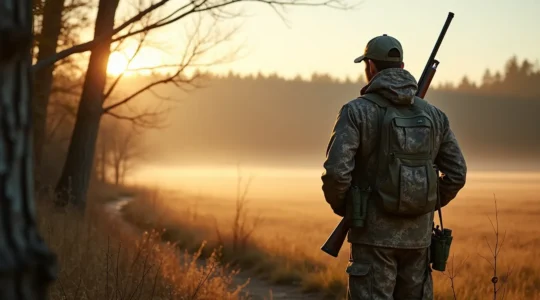
Mixed Bag Hunting: How to Switch Mindsets Between Predator and Prey?
Successful mixed-bag hunting isn’t about carrying more gear; it’s about mastering the rapid mental shift between hunting predator and prey. Learn to recalibrate your senses from spotting large game to detecting subtle small game signs. Turn a “failed” deer hunt…
Read more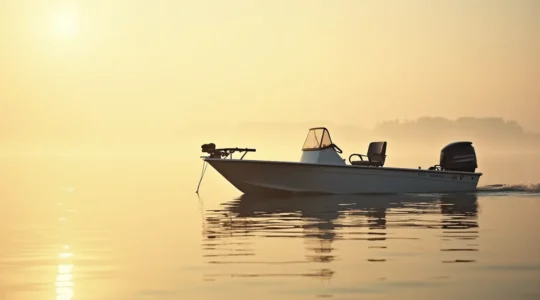
Beyond the Basics: 8 Advanced Skills to Master Your Fishing Boat
In summary: Mastering a fishing boat requires moving beyond basic knowledge to understand the principles of precision control, environmental stewardship, and safety systems. Advanced techniques like dual-point anchoring and sophisticated sonar analysis are essential for fishing specific structures and pressured…
Read more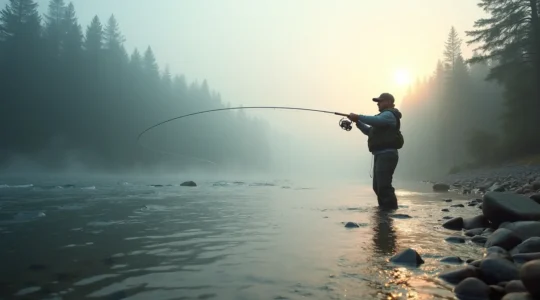
Dry Fly or Nymph: Which Technique Catches More Trout Under Pressure?
The debate over whether dry flies or nymphs are superior for pressured trout is a fundamental misunderstanding of the challenge. Success hinges not on the fly’s location in the water column, but on mastering the physics of presentation and decoding…
Read more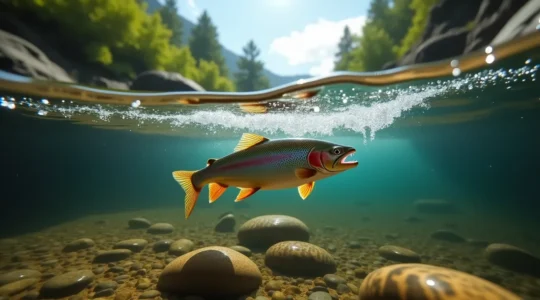
How to Read River Seams to Locate Feeding Fish Instantly?
For anglers accustomed to still water, a river’s current can feel like random chaos. The key isn’t to fight it, but to understand its predictable physics. This guide decodes the hydraulic events—flow, structure, and pressure—that create a clear map of…
Read more
Why Monofilament Line Is Still the Best Choice for Live Bait Fishing?
Contrary to modern hype, monofilament’s supposed “flaws” like stretch and memory are actually its greatest strategic assets for live bait fishing. The inherent stretch acts as a shock absorber, preventing pulled hooks and allowing fish to fully commit to the…
Read more
How to Choose an Angling Style That Perfectly Matches Your Patience Level
The secret to enjoying fishing isn’t developing more patience, but understanding and embracing the type of patience you already possess. Active patience thrives on constant adjustment and movement, making kayak fishing or using trolling motors highly rewarding. Passive patience finds…
Read more
Rifle, Bow, or Shotgun: Which Weapon Fits Your Local Terrain Best?
Choosing your first hunting weapon is overwhelming, but the right choice is dictated by an objective analysis of your terrain, not by popular opinion or brand loyalty. Dense cover demands absolute reliability and quick handling, favoring certain rifle actions or…
Read more
How to Become Invisible to Game Without Relying Solely on Camo Patterns?
True invisibility in the field is not something you can buy; it is a discipline you must earn by exploiting the sensory gaps of your prey. Your upright human shape is the primary threat signal that alerts game, long before…
Read more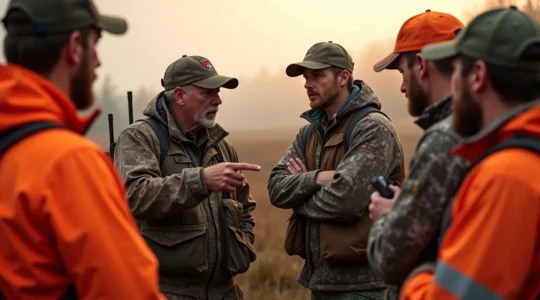
How to Coordinate a Group Hunt Without Compromising Individual Safety?
A successful group hunt is not measured by the harvest, but by the fact that every hunter returns home safely, a result achieved only through rigid protocol. Safety relies on an enforced system of protocols, not on individual suggestions or…
Read more